Monday, 3 June 2024

Reviewn June 2: Dungeon fantasy monster seeds

Every few days in June I’m picking a TTRPG book that’s been languishing on my shelf or hard drive, reading it, and writing a review. I don’t believe in attempting a full critique of game content I haven’t run or played, so my focus will be on discussing the work’s best ideas and keeping criticisms to text-level quibbles.

Today I’m looking at Dungeon fantasy monster seeds, a 16-page pamphlet by Matt Riggsby and Peter Dell’Orto, published by Steve Jackson Games. It’s for Dungeon Fantasy Roleplaying Game, a ‘powered by GURPS’ game. This little resource just collects and compiles the bonus monster ideas from the game’s crowdfunding campaign.

The Dungeon Fantasy RPG has been on my “want to play or run” wishlist since I started following Peter D’s blog many years ago. This expansion wouldn’t make much sense without the basic Dungeon Fantasy materials; I believe I got it a little while ago from a Kickstarter.

Gameable content:

This is just sixteen pages, but they provide plenty of old-school style world content. All of it, at least to me, hearkens back to AD&D days.
  • One idea is capturing a crushroom for sale to guard a druid’s grove. It’s reminiscent of AD&D dragon prices.
  • I’m always on the lookout for diegetic reasons that the dungeon would be restored to a hazardous state. In DF, that’s bronze spiders.
  • An ancestor’s draugr bodyguards wear delicate golden jewellery, vulnerable to fire.
  • Werewolves inhabiting a dungeon might round up herds of animalian monsters, driving them in waves towards delvers.
  • Gargoyles that attack by actually spitting water, a defining feature of real gargoyles (which are both artistic flourishes, and fundamentally designed to keep erosive water away from building).
If the goal was to spike a reader's interest in Dungeon Fantasy RPG, it succeeded.

My favourite bit:

A troll smart enough to be a wizard! Or perhaps a cleric of a trollish god. TTRPG trolls can be a bit played-out, so it’s always good to mix in some fresh ideas. Juxtaposition (the primeval, bestial troll with its unstoppable physiology; the sagacious, finesse-based, usually frail wizard) is often a good way to get that.

Where to get it:

https://warehouse23.com/products/dungeon-fantasy-monster-seeds-pdf

Saturday, 1 June 2024

Reviewn June 1: Lair of the Lamb

Every few days in June I’ll be picking a TTRPG book that’s been languishing on my shelf or hard drive, reading it, and writing a review. I don’t believe in attempting a full critique of game content I haven’t run or played, so my focus will be on discussing the work’s best ideas and keeping criticisms to text-level quibbles.

We’re starting out strong with Lair of the Lamb, a 54-page adventure by Arnold Kemp of Goblin Punch fame.

The sketch summary is that the White Temple of Vandoh, God(dess) of Wisdom, Patience, Self-improvement, and Sunlight, is keeping the titular Lamb, a huge fleshy beast and horrible holy monster, in its back rooms and feeding it people to harvest its lambfruit.

The PCs are some of the human sacrifices (a dozen generic level 0 characters), making for a classic ‘funnel’ and introduction to dungeon delving. I like this. Leaving out full-blown backstory-having character creation means one less chance for players to get in their PCs’ heads, but it’s a really fast start, and I think the intention is that the players will build up a rapport with the characters who survive. The heightened peril of a funnel makes for exciting play.

It’s overtly a tutorial for new TTRPG players, or at least players new to old-school style. Lair of the Lamb is a ‘teaching dungeon’, not only for OSR play, but as an introduction to the GLOG ruleset. I think it does that pretty well, although at some point you still have to list out all the rules.

Goblin Punch is in my lengthy folder of bookmarks for blogs where I’ve read scattered entries and decided it’s worth reading the whole thing, but haven’t got around to it. I thought I probably had a winner cracking open this adventure, and I was right.

The Lamb, illustrated by Warren D
Illustration by Warren D


The style:

  • It has all the things I like about old-school play. (“A shocking amount [sic] of problems can be solved with enough rope.”)
  • The Advice to DMs is gold. It’s like a twelve-bullet-point condensation of great TTRPG advice (despite, or possibly because, of the fact that half of them are variations of the idea “role-playing is ultimately about making meaningful choices”). I'd recommend reading this adventure just for that half page.
  • The Lamb is a huge gross monster. It’s a puzzle monster, designed to squish characters into the funnel, but it’s also clearly expected that if the players succeed in escaping the dungeon, their characters will probably find a way to kill it along the way.
  • Mystic languages which have minor magical effects just by speaking them. The fact they’re associated with certain kinds of fantasy people says something about what those people are in the implied setting.
  • There's some old standbys in use. I’m not a fan of flammable oil, especially in an implied low-magic, low-technology setting (if you can ignite a pool of oil, it’s either refined petroleum or it’s magical). But that’s easy enough to change.

There’s some nasty body horror stuff, but as long as it’s not too much for you, it’s very evocative and grounding in the world. There’s also a small number of very cool (and gross) magic items, and dangerous magical miscellanea. I like the chest that is heavily-sealed in ways clearly meant to contain rather than keep out. It’s not a fakeout or a dare; the fully-detailed horrible entity inside the chest will be a huge problem and the death of at least one character if released, but I can also see how the delve would continue with it around.

The rules:

  • Each level 0 funnel character is a set of just 14 statistics, determined with 10 separate rolls. Likewise, the extreme simplicity of monster stats should make for a fast-paced game.
  • I really like the idea of unlocking additional class options through play, at least for new campaigns. It might work best per player and/or across campaigns, if people come and go in a long-running campaign or in a series of different games run in the same system. The idea is tied in well to the dungeon, with three or four bonus classes unlockable along the way depending on what PCs do.
  • By requiring a player to hit a target number, the level-up system quietly makes it easy to increase awful stats but increasingly difficult to improve an outstanding ability score. That’s an interesting choice.
  • The investigation/search/noise keywords is elegant, even if they’re not used completely consistently in the dungeon (there are a few spots where they’re notably absent).
  • HP are overtly don’t-get-hit points and come back quickly with a meal. I always respect when a game at least takes a position on this.
  • There’s great little mechanics like this: “5 favors: The party's favorite ghoul will join the party.” and this: “Whenever you nearly die as a result of a failed Save, you gain a permanent +4 bonus to that type of Save. The triggering event is recorded on the back of your character sheet (in your Legendarium).”
There were two parts of the rules that puzzled me, but I may simply be missing something, not having actually tried them out in play.
  • First, OSR-style play requires ease of escape (as this book points out: “If a combat is too difficult for the PCs, they can always flee”), which in turn demands robust escape rules. But the pursuit rules look incredibly punishing. The PCs usually have a slightly worse than even chance of getting a step ahead of their pursuers, even if they’re not slowed by anything, and on failure they suffer a round of attacks. On top of this, an enemy can use all their attacks against a PC who flees past them. Is the funnel enough to compensate for this?
  • Second, the encounter system, with its Encounter Die vs Recon/Ambush die, has some neat mechanics but needs tweaking to factor in e.g. different senses. As it stands, the less light you are emitting in the pitch-black dungeon, the more likely you are to be ambushed, regardless of context.

It's worth noting that the adventure is meant to be 'complete', in that it contains all the necessary base rules, and is put in the creative commons.

The dungeon:

The lair of the Lamb in Lair of the Lamb is well thought out and well laid out. It has a slightly patchwork feeling, but there's also a plausible backbone to the main chambers, hints at a history, cunning traps and puzzles, and a consistent tone. I love dungeons with elevation changes.

It's all designed to provide a gradual opening of possibilities, which makes sense as a teaching dungeon. More exploration directions become available of course, but I also mean in terms of what’s attainable with the group’s equipment, knowledge, and possibly allies. For example, the PCs begin trapped in the lair, but with skill can find a way to trade with a ruthless merchant through a crack in the wall, opening up possibilities.

The presentation of information for the GM running the dungeon is generally exceptional. A precis is given beforehand for new sections, like the second-floor ghouls. The last page is an index to some key items in the dungeon, and gives notes about alternative ways to run the dungeon which could be very helpful; I’ve seen professionally published adventures that aren’t anywhere near this helpful.

Spells:

This game has by far the best implementation of Geas I’ve seen in any D&D-like, ever. Precognition is also a great spell. TTRPGs often have trouble with divinatory magic, but I can see this working.

I'm going to have to read up on GLOG magic some more, and try it out. I love the flat power level aspect, the inherently dangerous aspect, and the evocative and novel spells. Only having a semi-fixed number of spells per day is an interesting midpoint between approaches with spell slots/points and those with infinite magic (limited by time, magnitude of effect, or by other means).

Minor text quibbles:

  • Lair of the Lamb is rough and ready, riddled with typos, with some NPC names changing, wrong map references, etc. A three-hour editing pass would have found them, but it was distributed for free, so I can hardly complain.
  • A couple of the starting professions offer variations by gender, but a large number don’t. Also, if the setting is quasi-medieval, then you probably shouldn’t be able to roll up a male wet nurse; conversely, if we’re applying modern norms, then ‘gypsy’ should not be on the list.
  • The ‘advice to players’ leaves a few terms undefined which might trip new players up.
  • The text isn’t always sure, from one sentence to the next, whether it’s talking to the players or the DM.

No real impediments to usability, I think.

My favourite bit:

Pacifist polypores!

Where to get it:

https://goblinpunch.blogspot.com/2020/04/lair-of-lamb-final.html

Sunday, 26 May 2024

Upon training your character's replacement

I was thinking about the value of a long time scale for fantasy TTRPG adventures, and how it actually ties in neatly with many aspects of old-school style of play:

  • Gold-as-xp, and treasure-hunting as the foundational mode of play
  • Delves and expeditions
  • A slower, more plausible pace of character advancement including training costs for levelling up
  • Costs for character death; replacement characters who aren't automatically the same power level as their predecessor
  • Emphasis on investing in a base, community, big player-driven projects, and other aspects of the game world
  • Social connections, hirelings, delegation, and realm play
  • A slower or more 'realistic' time required to recover from injury

Castle flanked by griffons

Let's say you implement seasonal play, as in e.g. http://udan-adan.blogspot.com/2017/01/the-long-haul-time-and-distance-in-d.html. The PCs have a meagre initial home base. They have some local adventures and make some coin. Enough that they can plan a modest expedition, one that will take months. They come home and spend their wealth, advancing their characters, improving their base, and acquiring the resources for a big expedition, one that will take seasons to complete.

Now let's build on this basis, by adding some game elements to do with character advancement, followers, and character replacement, and see what other common rules might be tweaked.

Character advancement

Character advancement has a cost in looted wealth (e.g., at 1 gp = 1 xp or whatever works with your game rules). Up to half of looted wealth can be used for training; the rest is available for improving the characters' lives and pursuing their goals in other ways.

The requirement that xp must be from looted wealth (e.g. dungeon treasure) ties it back in to the idea that the characters are getting something out of their experiences on delves and expeditions, and also prevents advancement based on capitalism; it feels gamey, but not TOO gamey.

Looted wealth is used to pay for training, tutors, study materials, and so on. Early on, these things are readily available. At higher levels, they might have to be sought out in the world, as it gets harder to find more advanced texts, teachers more skilled than your character, and so on.

Character advancement therefore represents costly, high-intensity learning and study (with an undertone of the character having gone out and had perilous experiences, resulting in both the necessary wealth and the motivation to excel in the training). Advancement takes a long time; let's say a season per level. You could have a more fine-grained system with an increasing time requirement, though.

Followers and character replacement

From say level 2 or 3, players can acquire a number of followers. In D&D-likes, we might say they have followers up to one third of their Charisma score. In those games that already have fleshed-out follower mechanics, you'll need to call them something else or combine the systems.

Followers are just characters like any other, starting at level 1, created with the same character creation rules. They are distinguished from hirelings and other NPCs by an understanding at the table that they are essentially backup PCs; in particular, they won't ever betray the PCs, and they won't be killed 'off-screen' unless the players decided to send them into danger.

Players can invest looted wealth in their followers to advance them, exactly as for their primary PC. This has the same training costs and time and so on. A PC's followers can advance to 1 level lower than the PC and no further.

In-world, followers are squires, apprentices, butlers, bodyguards, family members, and so on. Some of a PC's followers might be their own apprentices (if the same class). But the wizard could retain a loyal housecarl, or the barbarian might have adopted a witch. And some of a PC's followers might be apprentices of other PCs.

The crucial detail for all of this: A player's next character will be drawn from their pool of followers. 

If a player's character is safe back home, the player may choose to retire that character, taking all its wealth and social connections and so on with it. If they choose retirement, the player can have some decent portion of the character's experience transferred directly to their followers, including their new character. Let's say, 50% of earned experience, with no more than 20% allocated to any one follower, and no advancement further than the level of the retiring character. Importantly, the old character then becomes a tool of the GM and is kept out of the way, not a free resource for the remaining PCs to hit up at any time.

But if a player's character dies, the player either takes on a new character at starting level or chooses a candidate from their followers.
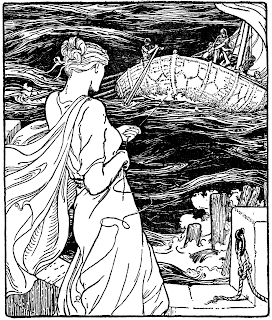
Rescuing a ship with incredible strength

Tweaking the rules

This framework works best when the cost of character advancement increases drastically with ever level (as in most editions of D&D). That way, a PC isn't terribly disadvantaged by diverting a split of their wealth/xp to maintain a small coterie of backups.

The GM may need to tweak the total size of wealth awards, and/or give a small bonus to any xp allocated to followers (so that it doesn't feel like the current character is losing out). There should be a balance; players should feel a tension between the risk of investing in their PC and the surety of investing in their followers (in case their PC dies).

Different play groups can organise things differently. One player could pick another's follower as a replacement if they agree, and possibly if a bonus/weregild is paid to compensate. Players could trade followers. A group might decide to divert some initial split of their loot into a set of replacement characters, then treat them as a communal resource.

Followers are also a resource in themselves, providing spells and character abilities and so on, giving additional incentive to invest in them. However, in a world where returning from death is cheap and easy, players won't feel as compelled to 'waste' xp on maintaining a pool of followers. The GM might need to make resurrection spells cost additional wealth/xp, or improve the rate of return on follower advancement, to balance it out.

This system would be easily adapted to a playstyle where everyone plays multiple characters at the same time.

Fighting a giant snake

What are the benefits?

So going back to that initial list of old-school play elements...

- Gold-as-xp, and treasure-hunting as the foundational mode of play
- Delves and expeditions

This framework, being predicated on plundered gold-for-xp, puts the focus squarely on treasure-hunting. Having a long time frame and big expeditions also helps emphasise the sheer amount of wealth in the adventure location: it's worthwhile planning a trek across the sea, continent, or world for.

- A slower, more plausible pace of character advancement including training costs for levelling up
- Costs for character death; replacement characters who aren't automatically the same power level as their predecessor

This framework achieves these while offering the players a lot of important choices. The long time frame with seasonal expeditions means that there are regular opportunities for the characters to advance via lengthy training without the pace of adventures precluding it, and without the game devolving into fine-grained in-world scheduling puzzles.

- Emphasis on investing in a base, community, big player-driven projects, and other aspects of the game world
Having increasingly huge amount of treasure in more distant and difficult-to-get to dungeons, alongside increasing wealth costs for levelling up, also helps with game world investment. PCs can do social climbing, come up with their own megaprojects, invest in capital, build fortresses, improve their communities, and so on, with the half of their looted treasure that they can't use for character advancement.

Having an expedition 'off season' (winter) creates room to breathe, and for PCs to get entangled in whatever the player finds compelling: planning, hiring, selling treasure, magic item creation, wheeling and dealing, starting a family, capital investment, politicking, dealing with long-term campaign events, and so on.

- Social connections, hirelings, delegation, and realm play
Expedition-based play encourages use of hirelings, and managing a coterie of followers ties in well with managing hirelings and paves the way to realm-based play. Travelling for a long time to an adventure location necessitates retaining staff or paying friends back home to tend to the character's other, broader concerns while the character is off adventuring.

- A slower or more 'realistic' time required to recover from injury
Not everyone cares about verisimilitude, but for those of us who do, the long time scale and the group of followers together permit a GM to tweak rules and powers towards needing long-term recovery. A character who gets injured has the time required to heal up before the next expedition. When a character is knocked out of a delve due to injury, their player isn't sidelined for a session or two; they have followers with them who can go in instead. Or they can attempt the risky proposition of having their PC continue while seriously injured, knowing they have the backstop of having levelled followers back home if 'injured' turns into 'dead' as a result.

Trekking up a glass mountain

...And finally, as the Against The Wicked City article noted, players will have a chance to actually update the age written on their character sheet.

Wednesday, 15 May 2024

On edge cases and magic

There's an innate design tension which RPG magic systems must contend with.

Magic must be more powerful than enacting the equivalent effect by mundane means, otherwise it's not fun and not fantastic. But if it's powerful and its uses are limitless (or at least non-rate-limited), then you become committed to an exceptionally high-magic setting.

If it takes ten seconds to give yourself a magical boon which lasts for ten minutes, the default player behaviour and the reasonable in-world behaviour will be to cast the spell every ten minutes... Unless they have a specific reason not to. That's almost always 'resource management'. In almost ever fantasy TTRPG, magic (whether spells, items, rituals, innate powers, etc) will be powerful and limited, i.e., a valuable resource; something to be conserved for when it will matter. Therefore, players will want to know the exact effect of some magic they might use, so that they can make an informed choice.

And this creates a design tension. How predictable to players is the magic their characters are harnessing?

Witch casting spell from book


The predictability predicament

Assuming you want magic to be able to do a huge range of things (it's magic), to get breadth of coverage, you either end up with these huge, minutely-detailed lists of magic effects and parameters (almost certainly player-facing), or you have a fuzzy system where the GM instantiates vague wordings at runtime (possibly via what amounts to negotiation with the player). These game design choices have different costs in terms of usability and satisfaction.

Most big, popular fantasy TTRPGs like D&D go with the huge, minutely-detailed lists of magic effects option. This arguably results in greater player agency, in the sense of being able to make good and meaningful decisions about resource allocation, but it constrains magic to the big official list (and if it's not exceptionally well-designed, you end up with weird codified corner cases and interactions). You also need to know the system really well to be effective as a player or a GM. Finally, there's a risk that presenting in exhaustive detail what is possible strongly implies that anything else isn't possible. You get cases like D&D 5e, where many destructive spells officially don't damage objects because a small subset of them specify that they do.

The fuzzy system option is attractive because it makes magic more 'mysterious' and wild, and thus fantastical. But it can be hard for a GM, especially one who isn't already operating in a "rulings not rules" tradition. But it can also be hard for players to come to terms with, unless either (a) it's the case in-world that a mage never knows exactly what they're going to get when they do some magic (which is flavourful, but risks a poor play experience), or (b) the GM and player together determine what happens when the magic is used. The latter might sound good (an opportunity for collaborative buy-in) or bad ('Mother May I' gameplay). Some GMs are surprised to find that many players hate 'collaborative storytelling exercises' spilling over into their roleplaying games. Either way, it doesn't actually resolve the tension: it's still in the player's best interests to stop and discuss the possible magical effect before they can make an informed choice whether to use their magic.

Variants of the fuzzy system where e.g. the GM has to follow certain rules to come up with a power-level-appropriate instantiation of a spell at run-time are close to being the worst of both worlds: mechanically fiddly but without giving a player enough information to make decisions with, and you just end up building that minutely-detailed canonical list slowly over time.

Resolving the tension

I consider this an open problem. As I've suggested before, I think the best practises are to

  • Pick a path and stick with it, rather than mixing up how rigid and predictable the magic system is in different use-cases within the same game; and
  • Have an extremely strong, well-thought out metaphysics which either underpins the mechanical design for the minutely-detailed lists option or informs what 'should be the case' for the fuzzy system option.

Food for thought

Here are some questions your magic system must be robust enough to answer, consistently:

If you turn flour to silver dust and mix it into acid, changing it to silver nitrate and creating heat, what happens to the silver nitrate if the spell wears off? What happens to the heat? If the compound is left over, can you reduce it to get silver? Does the resulting silver still count as being magical?

If you turn a pile of stones into loaves of bread and spend a week eating them, what happens to your tissue, the partially-digested bread, and the waste, if the magic ends? Do you die instantly? Does the energy you got from eating disappear?

If you turn a stone into a cat, and that cat eats and sweats and breathes makes waste, then the magic is dispelled, what happens to the bits of world (food and air and water) that got incorporated into the cat's body? Are they in the stone? Do they turn to stone? Can they be turned back? What happens to the cat's sweat and waste and loose hairs and skin particles out in the world? Do they turn to stone? What if the cat was a kitten, and it grew much bigger and older before the spell ended?

Or if the original subject was a mouse rather than a stone, what happens to the cells that changed in its body? Was there a 'mapping' from one mouse cell to multiple cat cells, so that injuries and shed cells and replaced cells carry back over? Do microbial diseases carry back over? Does cancer?

Are all your answers consistent so far?

What happens if you turn someone into a statue and snap their arm off? What about if you turn someone into steel and then temper or anneal the metal? Or take a mould of their body, turn them into ice, melt them, and then refreeze the water in the mould?

What about if you turn a piece of metal into a piece of wood and burn it inside a big tank of air? Does the carbon dioxide turn into a metal oxide? In general, if you heat something up while it's magically transformed and then turn it back, is it still hot? What if you turned something really small into something really big and then it just got slightly warm by soaking up a million times more sunlight than the tiny thing would have?

If you expand a mouse to be the size of a horse and it eats a bucket of oats, what happens to the oats if it turns back? Does it matter whether they've been digested?

If you expand a mouse to be the size of a horse inside a mouse-sized terrarium that a mouse couldn't possibly break but a horse easily could, does the spell work? Does the answer change if the terrarium is nearly horse-sized? What about if you try it on a mouse that's inside a crack in solid rock? Is this meaningfully different from trapping a mouse under a piece of heavy cloth and then expanding it to the size of a horse?

If you cast a spell on a subject, then another one that seems to have the inverse effect (flesh to rock then rock to flesh), do you get back the exact original? If so, why? If not, what happens if only the first spell ends or is dispelled? What if you cast the first spell, then make some orthogonal change to the subject, then cast the second?

What in-universe mechanism decides whether an object counts as meeting the targeting requirements of a spell? Does a spell that works on chairs work on a one-legged stool if the caster doesn't think a one-legged stool is a chair?

Do any of the answers to these questions change depending on whether it's a temporary effect, a dispelled permanent effect, a magically reversed effect, an intrinsic ability of a magical creature, the effect of an item, etc?

Two wizards examine an elixir


Thursday, 11 April 2024

Straw demon

RPG idea

If you ever find yourself making up a guy in your head to get mad at, that's the avatar of a memetic monster protruding into your reality.

The first time it's invoked, it's just a mess of straw in the rough shape of a figure. But every time you imagine someone who's in the wrong and have a completely fabricated argument with them, the demon takes on a more human form. Eventually, when it's become a perfect facsimile of you, it reaches through the next mirror you see and tries to drag you back into its realm.


The World Tree Is Coal And You Must Mine

The world had a World Tree. Aeons ago. Now it has a legendary coal seam. What lingers in the darkness beneath the earth? The World Tree Is...