Showing posts with label OSR. Show all posts

Saturday, 29 August 2026

Forgotten Engines

Forgotten Engines title. Swords, robots, and rayguns.


The warrior wields a raygun. The conjurer casts Knock to let the sapient trilobites out of the cryo-chamber. The thief has a plan to trick a dragon into fighting the crazed robotic lizard that's currently trashing the facility.


Robots! Dinosaurs! Lasers!

Forgotten Engines adds confused Neanderthals, ancient fungoids, and shiny hoverpacks to your swords-and-sorcery roleplaying game.

This 65-page supplement is crammed with ancient advanced technology and time-displaced beasts. It's designed for use with The Black Hack – or you can adapt it for any old-school tabletop RPG.

As if you needed a justification for putting robots and stasis fields in your fantasy setting, Forgotten Engines provides a history of those prehistoric super-intelligences, the Desperate Fungoids, and the flight of their civilisation ever further forwards in time in an attempt to escape their doom.


Crammed With New Content

Thirty techno artifacts, from robotic exoskeletons to deployable containment chambers, railguns and rayguns for all occasions, and the Magnificent Autodibble!

Prehistoric beasts: mammoths, fungoids, proto-troglodytes, nautiloid hiveminds, uplifted terror lizards, cyborg apes, and psychic tree ferns!

Random tables for robots of all shapes and sizes!

A surprising number of ways to be hit by mega-laser blasts fired from the moon!


Science Fantasy Dungeons

To help create adventures, there's:

Setpiece ideas like "out-of-control robot tank guarding a mothballed munitions factory" and "crashed geodesic biodome sinking into swamp, systems running down in odd ways"!

Random site modifiers: Escaped aliens! Mutagenic gas! Gravity free zones! Caveman uprisings!

New spells and odd NPCs to be found in Desperate Fungoid city ruins!


Miracles of the Ancients

Includes a Creative Commons license for hacking, and an alternative PDF for small screens and home printing.

Available now:

https://periapt-games.itch.io/forgotten-engines

https://rpg-trader.com/products/8864/forgotten-engines

https://www.drivethrurpg.com/en/product/581529/forgotten-engines


Sunday, 23 June 2024

Reviewn June 12: The Undercellars

Every few days in June I’m picking a TTRPG book that’s been languishing on my shelf or hard drive, reading it, and writing a review. I don’t believe in attempting a full critique of game content I haven’t run or played, so my focus will be on discussing the work’s best ideas and keeping criticisms to text-level quibbles.

Today I read The Undercellars, a 7-page dungeon by Joseph Manola. It was a response to a community challenge a few years ago, to use a Dyson Logos map for ‘the condensation of utility, beauty, meaning and originality into a functional and interesting micro-adventure’.

Joseph M’s dungeon could be used for his Against the Wicked City setting, but could equally be plopped down and used as-is in many games. It seems to be for a non-specific old-school or OSR system; anything with GP, AC, and classic ability scores should work. Monster stats are compiled at the end, referring back to their locations. All the monsters have specific traits rather than being bags of hit points, which is nice.

The dungeon’s contents:

The dungeon is an abandoned secret temple complex lying in ruin, with layers of history. There’s a strong implied story, about a family lying in ruin, with its own layers of history. I really liked this dungeon, and the only thing I think it was lacking was a concise explanation for the GM at the very beginning, if its purpose isn’t to be ‘read for entertainment’ (something Joseph M has talked about at length).

The Undercellars has some consistent theming, in particular sleep, hallucination, blood, worship, ruination, and a corrupted family line. There’s history there, with a murderous family, blackmail, cult worship, a covert graveyard, dark secrets, shame and horror, bloodlines and mysteries. It’s all discoverable and more importantly, the dungeon offers actual interactions with player characters, such as the chance to perform an ancient rites and acquire power at a nasty cost.

Everything on the map is keyed, and nothing notable on the map is absent. Even in seven pages, The Undercellars resonates with a feeling that there’s always more to discover. It’s full of evocative details which are great fodder for dungeon adventure:

  • Animated skeletons that are desperately trying to get away, and which crumble under an open sky
  • Laudanum laced with hallucinogenic herbs “worth 10 GP per dose to an artist or insomniac”
  • Troglodytic proto-human ghouls
  • Dead cultists lying where they were killed long ago by looters, deepening a sense of history
  • Undying demonic object of worship offering magical/chemical indoctrination into the cult
  • A monster with deathly cold toxic blood, and another which causes wounds to bleed secrets

One of the set pieces is a big persistent slow beast that can be eluded but is unlikely to be beaten in a straight-up fight, the kind of thing that's an OSR staple. The text includes half a dozen possible ways of dealing with it, scattered throughout the dungeon, which I appreciate. They are some of numerous ties between aspects of the dungeon, giving it a dynamic feel and enhancing the feeling of history.

Minor text quibbles:

This scenario was well-written and textually polished, with nary a typo to be seen (if I remember correctly, Joseph M is an academic writer, which might help). The only thing I noticed was the occasional mismatch of full sentences alongside others that are simplified phrases (eliding ‘is’ or ‘the’ or ‘there is a’).

My favourite bit:

The mysterious, laconic, semi-immortal lotus-eater ‘Dryden’, languishing in a pit.

Where to get it:

On Joseph M's blog: http://udan-adan.blogspot.com/2021/02/the-undercellars-playable-dungeon-for.html

Saturday, 1 June 2024

Reviewn June 1: Lair of the Lamb

Every few days in June I’ll be picking a TTRPG book that’s been languishing on my shelf or hard drive, reading it, and writing a review. I don’t believe in attempting a full critique of game content I haven’t run or played, so my focus will be on discussing the work’s best ideas and keeping criticisms to text-level quibbles.

We’re starting out strong with Lair of the Lamb, a 54-page adventure by Arnold Kemp of Goblin Punch fame.

The sketch summary is that the White Temple of Vandoh, God(dess) of Wisdom, Patience, Self-improvement, and Sunlight, is keeping the titular Lamb, a huge fleshy beast and horrible holy monster, in its back rooms and feeding it people to harvest its lambfruit.

The PCs are some of the human sacrifices (a dozen generic level 0 characters), making for a classic ‘funnel’ and introduction to dungeon delving. I like this. Leaving out full-blown backstory-having character creation means one less chance for players to get in their PCs’ heads, but it’s a really fast start, and I think the intention is that the players will build up a rapport with the characters who survive. The heightened peril of a funnel makes for exciting play.

It’s overtly a tutorial for new TTRPG players, or at least players new to old-school style. Lair of the Lamb is a ‘teaching dungeon’, not only for OSR play, but as an introduction to the GLOG ruleset. I think it does that pretty well, although at some point you still have to list out all the rules.

Goblin Punch is in my lengthy folder of bookmarks for blogs where I’ve read scattered entries and decided it’s worth reading the whole thing, but haven’t got around to it. I thought I probably had a winner cracking open this adventure, and I was right.

The Lamb, illustrated by Warren D
Illustration by Warren D


The style:

  • It has all the things I like about old-school play. (“A shocking amount [sic] of problems can be solved with enough rope.”)
  • The Advice to DMs is gold. It’s like a twelve-bullet-point condensation of great TTRPG advice (despite, or possibly because, of the fact that half of them are variations of the idea “role-playing is ultimately about making meaningful choices”). I'd recommend reading this adventure just for that half page.
  • The Lamb is a huge gross monster. It’s a puzzle monster, designed to squish characters into the funnel, but it’s also clearly expected that if the players succeed in escaping the dungeon, their characters will probably find a way to kill it along the way.
  • Mystic languages which have minor magical effects just by speaking them. The fact they’re associated with certain kinds of fantasy people says something about what those people are in the implied setting.
  • There's some old standbys in use. I’m not a fan of flammable oil, especially in an implied low-magic, low-technology setting (if you can ignite a pool of oil, it’s either refined petroleum or it’s magical). But that’s easy enough to change.

There’s some nasty body horror stuff, but as long as it’s not too much for you, it’s very evocative and grounding in the world. There’s also a small number of very cool (and gross) magic items, and dangerous magical miscellanea. I like the chest that is heavily-sealed in ways clearly meant to contain rather than keep out. It’s not a fakeout or a dare; the fully-detailed horrible entity inside the chest will be a huge problem and the death of at least one character if released, but I can also see how the delve would continue with it around.

The rules:

  • Each level 0 funnel character is a set of just 14 statistics, determined with 10 separate rolls. Likewise, the extreme simplicity of monster stats should make for a fast-paced game.
  • I really like the idea of unlocking additional class options through play, at least for new campaigns. It might work best per player and/or across campaigns, if people come and go in a long-running campaign or in a series of different games run in the same system. The idea is tied in well to the dungeon, with three or four bonus classes unlockable along the way depending on what PCs do.
  • By requiring a player to hit a target number, the level-up system quietly makes it easy to increase awful stats but increasingly difficult to improve an outstanding ability score. That’s an interesting choice.
  • The investigation/search/noise keywords is elegant, even if they’re not used completely consistently in the dungeon (there are a few spots where they’re notably absent).
  • HP are overtly don’t-get-hit points and come back quickly with a meal. I always respect when a game at least takes a position on this.
  • There’s great little mechanics like this: “5 favors: The party's favorite ghoul will join the party.” and this: “Whenever you nearly die as a result of a failed Save, you gain a permanent +4 bonus to that type of Save. The triggering event is recorded on the back of your character sheet (in your Legendarium).”
There were two parts of the rules that puzzled me, but I may simply be missing something, not having actually tried them out in play.
  • First, OSR-style play requires ease of escape (as this book points out: “If a combat is too difficult for the PCs, they can always flee”), which in turn demands robust escape rules. But the pursuit rules look incredibly punishing. The PCs usually have a slightly worse than even chance of getting a step ahead of their pursuers, even if they’re not slowed by anything, and on failure they suffer a round of attacks. On top of this, an enemy can use all their attacks against a PC who flees past them. Is the funnel enough to compensate for this?
  • Second, the encounter system, with its Encounter Die vs Recon/Ambush die, has some neat mechanics but needs tweaking to factor in e.g. different senses. As it stands, the less light you are emitting in the pitch-black dungeon, the more likely you are to be ambushed, regardless of context.

It's worth noting that the adventure is meant to be 'complete', in that it contains all the necessary base rules, and is put in the creative commons.

The dungeon:

The lair of the Lamb in Lair of the Lamb is well thought out and well laid out. It has a slightly patchwork feeling, but there's also a plausible backbone to the main chambers, hints at a history, cunning traps and puzzles, and a consistent tone. I love dungeons with elevation changes.

It's all designed to provide a gradual opening of possibilities, which makes sense as a teaching dungeon. More exploration directions become available of course, but I also mean in terms of what’s attainable with the group’s equipment, knowledge, and possibly allies. For example, the PCs begin trapped in the lair, but with skill can find a way to trade with a ruthless merchant through a crack in the wall, opening up possibilities.

The presentation of information for the GM running the dungeon is generally exceptional. A precis is given beforehand for new sections, like the second-floor ghouls. The last page is an index to some key items in the dungeon, and gives notes about alternative ways to run the dungeon which could be very helpful; I’ve seen professionally published adventures that aren’t anywhere near this helpful.

Spells:

This game has by far the best implementation of Geas I’ve seen in any D&D-like, ever. Precognition is also a great spell. TTRPGs often have trouble with divinatory magic, but I can see this working.

I'm going to have to read up on GLOG magic some more, and try it out. I love the flat power level aspect, the inherently dangerous aspect, and the evocative and novel spells. Only having a semi-fixed number of spells per day is an interesting midpoint between approaches with spell slots/points and those with infinite magic (limited by time, magnitude of effect, or by other means).

Minor text quibbles:

  • Lair of the Lamb is rough and ready, riddled with typos, with some NPC names changing, wrong map references, etc. A three-hour editing pass would have found them, but it was distributed for free, so I can hardly complain.
  • A couple of the starting professions offer variations by gender, but a large number don’t. Also, if the setting is quasi-medieval, then you probably shouldn’t be able to roll up a male wet nurse; conversely, if we’re applying modern norms, then ‘gypsy’ should not be on the list.
  • The ‘advice to players’ leaves a few terms undefined which might trip new players up.
  • The text isn’t always sure, from one sentence to the next, whether it’s talking to the players or the DM.

No real impediments to usability, I think.

My favourite bit:

Pacifist polypores!

Where to get it:

https://goblinpunch.blogspot.com/2020/04/lair-of-lamb-final.html

Sunday, 26 May 2024

Upon training your character's replacement

I was thinking about the value of a long time scale for fantasy TTRPG adventures, and how it actually ties in neatly with many aspects of old-school style of play:

  • Gold-as-xp, and treasure-hunting as the foundational mode of play
  • Delves and expeditions
  • A slower, more plausible pace of character advancement including training costs for levelling up
  • Costs for character death; replacement characters who aren't automatically the same power level as their predecessor
  • Emphasis on investing in a base, community, big player-driven projects, and other aspects of the game world
  • Social connections, hirelings, delegation, and realm play
  • A slower or more 'realistic' time required to recover from injury

Castle flanked by griffons

Let's say you implement seasonal play, as in e.g. http://udan-adan.blogspot.com/2017/01/the-long-haul-time-and-distance-in-d.html. The PCs have a meagre initial home base. They have some local adventures and make some coin. Enough that they can plan a modest expedition, one that will take months. They come home and spend their wealth, advancing their characters, improving their base, and acquiring the resources for a big expedition, one that will take seasons to complete.

Now let's build on this basis, by adding some game elements to do with character advancement, followers, and character replacement, and see what other common rules might be tweaked.

Character advancement

Character advancement has a cost in looted wealth (e.g., at 1 gp = 1 xp or whatever works with your game rules). Up to half of looted wealth can be used for training; the rest is available for improving the characters' lives and pursuing their goals in other ways.

The requirement that xp must be from looted wealth (e.g. dungeon treasure) ties it back in to the idea that the characters are getting something out of their experiences on delves and expeditions, and also prevents advancement based on capitalism; it feels gamey, but not TOO gamey.

Looted wealth is used to pay for training, tutors, study materials, and so on. Early on, these things are readily available. At higher levels, they might have to be sought out in the world, as it gets harder to find more advanced texts, teachers more skilled than your character, and so on.

Character advancement therefore represents costly, high-intensity learning and study (with an undertone of the character having gone out and had perilous experiences, resulting in both the necessary wealth and the motivation to excel in the training). Advancement takes a long time; let's say a season per level. You could have a more fine-grained system with an increasing time requirement, though.

Followers and character replacement

From say level 2 or 3, players can acquire a number of followers. In D&D-likes, we might say they have followers up to one third of their Charisma score. In those games that already have fleshed-out follower mechanics, you'll need to call them something else or combine the systems.

Followers are just characters like any other, starting at level 1, created with the same character creation rules. They are distinguished from hirelings and other NPCs by an understanding at the table that they are essentially backup PCs; in particular, they won't ever betray the PCs, and they won't be killed 'off-screen' unless the players decided to send them into danger.

Players can invest looted wealth in their followers to advance them, exactly as for their primary PC. This has the same training costs and time and so on. A PC's followers can advance to 1 level lower than the PC and no further.

In-world, followers are squires, apprentices, butlers, bodyguards, family members, and so on. Some of a PC's followers might be their own apprentices (if the same class). But the wizard could retain a loyal housecarl, or the barbarian might have adopted a witch. And some of a PC's followers might be apprentices of other PCs.

The crucial detail for all of this: A player's next character will be drawn from their pool of followers. 

If a player's character is safe back home, the player may choose to retire that character, taking all its wealth and social connections and so on with it. If they choose retirement, the player can have some decent portion of the character's experience transferred directly to their followers, including their new character. Let's say, 50% of earned experience, with no more than 20% allocated to any one follower, and no advancement further than the level of the retiring character. Importantly, the old character then becomes a tool of the GM and is kept out of the way, not a free resource for the remaining PCs to hit up at any time.

But if a player's character dies, the player either takes on a new character at starting level or chooses a candidate from their followers.
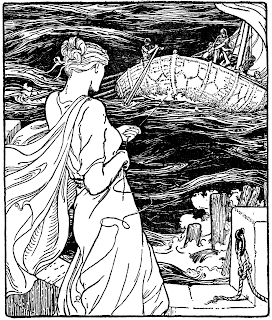
Rescuing a ship with incredible strength

Tweaking the rules

This framework works best when the cost of character advancement increases drastically with ever level (as in most editions of D&D). That way, a PC isn't terribly disadvantaged by diverting a split of their wealth/xp to maintain a small coterie of backups.

The GM may need to tweak the total size of wealth awards, and/or give a small bonus to any xp allocated to followers (so that it doesn't feel like the current character is losing out). There should be a balance; players should feel a tension between the risk of investing in their PC and the surety of investing in their followers (in case their PC dies).

Different play groups can organise things differently. One player could pick another's follower as a replacement if they agree, and possibly if a bonus/weregild is paid to compensate. Players could trade followers. A group might decide to divert some initial split of their loot into a set of replacement characters, then treat them as a communal resource.

Followers are also a resource in themselves, providing spells and character abilities and so on, giving additional incentive to invest in them. However, in a world where returning from death is cheap and easy, players won't feel as compelled to 'waste' xp on maintaining a pool of followers. The GM might need to make resurrection spells cost additional wealth/xp, or improve the rate of return on follower advancement, to balance it out.

This system would be easily adapted to a playstyle where everyone plays multiple characters at the same time.

Fighting a giant snake

What are the benefits?

So going back to that initial list of old-school play elements...

- Gold-as-xp, and treasure-hunting as the foundational mode of play
- Delves and expeditions

This framework, being predicated on plundered gold-for-xp, puts the focus squarely on treasure-hunting. Having a long time frame and big expeditions also helps emphasise the sheer amount of wealth in the adventure location: it's worthwhile planning a trek across the sea, continent, or world for.

- A slower, more plausible pace of character advancement including training costs for levelling up
- Costs for character death; replacement characters who aren't automatically the same power level as their predecessor

This framework achieves these while offering the players a lot of important choices. The long time frame with seasonal expeditions means that there are regular opportunities for the characters to advance via lengthy training without the pace of adventures precluding it, and without the game devolving into fine-grained in-world scheduling puzzles.

- Emphasis on investing in a base, community, big player-driven projects, and other aspects of the game world
Having increasingly huge amount of treasure in more distant and difficult-to-get to dungeons, alongside increasing wealth costs for levelling up, also helps with game world investment. PCs can do social climbing, come up with their own megaprojects, invest in capital, build fortresses, improve their communities, and so on, with the half of their looted treasure that they can't use for character advancement.

Having an expedition 'off season' (winter) creates room to breathe, and for PCs to get entangled in whatever the player finds compelling: planning, hiring, selling treasure, magic item creation, wheeling and dealing, starting a family, capital investment, politicking, dealing with long-term campaign events, and so on.

- Social connections, hirelings, delegation, and realm play
Expedition-based play encourages use of hirelings, and managing a coterie of followers ties in well with managing hirelings and paves the way to realm-based play. Travelling for a long time to an adventure location necessitates retaining staff or paying friends back home to tend to the character's other, broader concerns while the character is off adventuring.

- A slower or more 'realistic' time required to recover from injury
Not everyone cares about verisimilitude, but for those of us who do, the long time scale and the group of followers together permit a GM to tweak rules and powers towards needing long-term recovery. A character who gets injured has the time required to heal up before the next expedition. When a character is knocked out of a delve due to injury, their player isn't sidelined for a session or two; they have followers with them who can go in instead. Or they can attempt the risky proposition of having their PC continue while seriously injured, knowing they have the backstop of having levelled followers back home if 'injured' turns into 'dead' as a result.

Trekking up a glass mountain

...And finally, as the Against The Wicked City article noted, players will have a chance to actually update the age written on their character sheet.

Friday, 22 September 2023

d6 degrees of success with anything


Is the badger's burrow wide enough to squeeze down? Is the giant scorpion's flesh edible? Are the bars set in a stone weak enough to chip away? Will the dead tree's branch stand up to the dwarf's weight? Does the abandoned generator have any gas left in it?

You're a GM and need to determine some aspect of your world. Roll a d6. 1 is the worst plausible outcome for the characters, 6 is the best, and everything else is shades in between.

Why do this?

  • It's quicker than any other rules-based approach
  • It's helpful if you have trouble just snap deciding the answers to questions
  • It's useful when something would affect the PCs, so you would be either 'handing them a win' or 'screwing them over' by fiat
  • The dice can surprise you and challenge you
  • When not everything has the most likely default answer, it can make a world feel more real
  • There might be a rule for this situation (or one that can be adapted), but you don't remember where it is


The "crawling down the badger burrow" example:
1 - Looks barely wide enough to get down, but narrows partway through, so characters can get stuck upside down in the middle of a twisty dirt tube
2 - Isn't wide enough to squeeze through
3 - Is wide enough to squeeze down but requires a little digging around the bends
4,5 - Is wide enough for the smaller characters, but not the largest
6 - Is just large enough for everyone to get through

The "eating the giant scorpion meat" example:
1 - Is poisonous; incautious consumers suffer a minor ongoing poison effect
2 - Is mildly toxic; characters start throwing it up shortly after getting it down
3 - Is edible but tastes really bad
4,5 - Is fine to eat
6 - Is not merely edible, but delicious and keeps well

Etcetera.

The key understanding is that you don't even have to assign numbers and degrees of success before rolling. Just mentally frame - or speak out loud - your question. Then you roll, say, a 2. All you have to do is think, what's the second-worst answer to the question?

Advanced versions:

  • Rarely, you'll have a question where the range of plausible outcomes are neutral with regard to the player characters. Just orient yourself on whatever axis you can find, and roll.
  • Sometimes there will clearly be more possible axes than 'good' or 'bad'. Something could pose a high or low threat but offer a high or low reward, for example. Just use several dice, associating one colour with one axis.
  • With a basic intuitive understanding of dice probabilities, you can determine the answers to questions about populations, off the cuff. Say you've randomly generated a group of 21 soldiers on the road. How many are in poor morale? Could really be any number of them: 1d20. How many are currently battle-ready? Probably most but not all of them: 1d8+10. How many are carrying bows? Let's guess it's likely to be about half: 2d10.


Monday, 18 September 2023

The hit point problem


...Or, what do HP actually represent (in traditional RPGs and their descendants)?


Dr Bret Devereaux's recent article on armour and RPGs, in talking about how armour actually works, reminded me about this argument. It's an argument that's older than the internet, an argument that's fundamentally pointless, an argument that's been rehashed thousands if not millions of times... so I thought I might as well get into it briefly.

Let's start here:

Hit points are a combination of actual physical constitution, skill at the avoidance of taking real physical damage, luck and/or magical or divine factors. [...] a near-miss, a slight wound, and a bit of luck used up, [...] more often than not a grazing blow, a mere light wound which would have been fatal (or nearly so) to a lesser mortal. If sufficient numbers of such wounds accrue to the character, however, stamina, skill, and luck will eventually run out, and an attack will strike home
- Gary Gygax, Dragon #24


It seems widely accepted, as well as being straight from the horse's mouth, that hit points are a mixture of a creature's capacity for and resilience against suffering injury ('meat points') and its chances, for various reasons, of avoiding serious injury in situations in which it might suffer serious injury ('grace points').

There's an implication that grace points are mostly 'used up' before meat points. And the obvious interpretation is that there's some (unspecified) ratio of grace to meat.

Unfortunately it's still impossible to arrive at a really self-consistent understanding of hit points in D&D-likes, whether you think HP is 0.1% meat and 99.9% grace, 99.9% meat and 0.1% grace, or anything in between.

HP must be almost entirely meat points, for the following reasons.

  • 1 damage to a 100-HP creature has to entail actual physical harm because it can come with 'riders' like injecting poison from a poison-tipped dart. If the dart didn't pierce the flesh 'on hit', it wouldn't have been able to convey the poison. At the other end of the spectrum, 100 damage is enough to kill the creature (or nearly so, depending on edition), so that too must be actual physical harm.
  • In trad games, higher Constitution improves HP (i.e., meat points). In comparison, Dexterity, Wisdom, and Intelligence (i.e., grace points) don't improve hit points at all, and neither do weapon/armour use skills and features (when they exist). If grace points made up a non-negligible proportion of hit points, having these attributes would affect HP total.
  • Numerous game effects, spells, items, and so on have descriptors that equate even potentially quite small amounts of HP recovery with descriptions of physical wounds closing. I would guess an outright majority of supernatural healing effects involve physical injury in their description, with most of the others being ambivalent or lacking description, and very few indeed talking about restoring anything that seems like grace points.
  • Plenty of damage in classic RPGs comes from sources that can't easily be mitigated (or can come from them in principle, for no special rules for when that happens). You character is stabbed while unconscious. Your character falls onto a field of spikes. Your character swims across an acid lake. Your character takes intermittent damage from rotting disease. The moisture is leached from your character's body by a horrid spell. In cases like these, half of the justification for 'grace points' can't be in play: the character isn't 'using skill to avoid harm', the damage isn't 'near-misses', and the character isn't just 'getting tired' or 'pushing their luck'. There are whole character archetypes unlikely to be protected by 'divine forces' or 'magical factors'.


Of course, it's also true that

HP has to be almost entirely grace points, for the following reasons.

  • When a 100-HP creature takes 99 damage, this doesn't seem to involve any actual physical harm: in classic games being down to 1 HP has no immediate in-game consequence on the creature (notable exception: D&D 4e's bloodied condition, and even then the effect isn't "a massive reduction in all of the wounded creature's physical capabilities" like you would expect). Per rules, the creature doesn't fall over or involuntarily scream or pass out from pain or anything. (And sure, the game rules are an abstraction, but the same RPGs will have other subsystems that are vastly more fine-grained than the idea that if you put a sword through someone, it has major traumatic effects.) There is never any indication that the GM is expected to improvise these consequences, either.
  • Martial characters get more hit points; they're the ones who are best able to avoid harm, because that is what all of their training is for. That harm avoidance is HP.
  • Characters gain hit points with level, at a rate that is vastly higher than remotely plausible variance in a person's actual ability to survive wounds. You could maybe convince me that some exceptional person could have twice as many 'meat points' as average. Three, four, five times? No way.
  • The same plausibility argument applies in general. A twelve-foot giant should weigh about 1500 lbs or 700 kg. If something like that swings an axe at you and it connects, the best you can hope for is that whatever gets lopped off is non-vital. Plenty of D&D-like games would model this attack hitting as something that can be slept off (depending on a damage roll, possibly). High-level characters might take dozens of such hits, depending on the game.


So we've immediately run into contradiction: some things in the game tell us that HP is almost all meat, and other things tell us that HP is almost all grace.


Side note

There's another reason we're unlikely to square the circle and find a self-consistent explanation in (most) HP-based games: Extreme injury.

Suppose 100 damage is just enough to kill some creature: It has 100 HP, or 90, or 90 and then flubs some rolls, or whatever. For this creature, 100 damage kills, so 99 damage is as close to a mortal wound as you can get. This amount of harm heals naturally, and perfectly, very fast, in almost every trad game I've ever seen. In modern editions, this near-mortal wound just goes away overnight! In contrast, I've personally had garden scratches that took a week to heal. Even in OD&D, the upper limit on healing is one month. That would be an optimistic timeframe for being discharged in a modern hospital after "a wound that very nearly killed you". That kind of wound would usually be the beginning of years of physical therapy, if not permanent disability.

COUNTERARGUMENT 1: We can concoct explanations for this, involving abstraction, and how much more survivable wounds are with modern medicine (or with fantasy magic), and how unfun it is to play out deadly infections or characters with degraded abilities, and how we don't want to require a player to play a character who's only definitely going to die rather than dead... sure. I've never heard one that's really comprehensive within the fiction, which is what I'm mostly concerned with.

COUNTERARGUMENT 2: Some games layer lingering injury frameworks, scar systems, etc, onto HP systems. This is fine, and sometimes works pretty well! I will note that in my experience they usually still don't go far enough to make for good simulation, and in particular these additional systems almost always still use a weird sped-up timeframe. I think they're also pretty rare on the whole, for traditional D&D-likes. I like em, though.

COUNTERARGUMENT 3: Some fantasy game worlds might be assumed to have low-level magical healing on tap everywhere, so a very slow trickle of hit points amounts to recovering your HP overnight (or 2d6/night or with one full day of bed rest or whatever). Sure, this works in principle. But I don't think many games come right out and say in their setting information that this is what's going on; it's hard to import into most worlds; it also precludes some genre features, like the existence of lingering injuries and old scars in the broad populace.


Finally, let's flip it around and consider actual practises at the table, where this matters. It's always been the case that certain rules get ignored or changed by swathes of gamers.

At the table, what GM ever describes a sword swing inflicting 10 damage as 'you nearly get hit' or 'they get a little tired jumping out of the way of the sword's arc' or 'fortunately for the ogre, your blade bounces off his belt buckle'? My impression is that this essentially never happens, in part because it makes a hit sound just like a miss, which is both confusing and a letdown.

What I do see, sometimes, is GMs being cautious and sometimes even vague about what is going on within the world – not really a sign that everything is as it should be in the game. They describe damage to enemies as flesh wounds (up until the moment it kills), and damage to characters as minor abrasions and bruises. They're careful not to imply any level of injury that would have actual game world impact (like impeding a creature's movement or making it leave a trail of blood) or later raise questions like 'you said I shattered his arm with that critical hit, how is he climbing the rope now?' or 'you said I was skewered by three arrows, how come I got better completely overnight?'

And likewise, I sometimes see GMs avoid describing the effects of magical healing as 'knitting together wounds', 'restoring all your blood', etc – and sometimes just not describe it at all – because that implies the character had been seriously wounded, and it somehow never feels like a character is badly wounded at the table, no matter how low their HP goes.

And in other cases, I see tables of players and GMs venture into absurdism, where HP loss is always a grisly wound described with relish; such wounds come and go entirely without any knock-on effects within the world, disappearing overnight.


Reconciliation


Is there a way around this without having to hack some extremely core game rules?

Solution 1: Embrace indeterminacy. Hit points don't really mean anything, and wounds are never described until the moment they are gone. If 50 lost hit points are immediately restored by a powerful healing spell then it may well have been a devastating wound (especially if the sufferer was 'dying' as per e.g. 5e rules), and the GM may feel free to describe it that way. But when a character suffers through an afternoon's adventure with 50 missing hit points and they get restored overnight, those ones were in retrospect obviously just a little fatigue (not enough to cause exhaustion), scratches and bruises (not enough to impede movement), and 'expended' luck or divine grace (whatever that means).

Solution 2: Play it straight. This fantasy world is different from our own because of its fantasy elements, and those fantasy elements officially include people's bodies operating utterly differently to how they do in our world. You can go from 'fifty-fifty chance of death' to 'top physical condition' overnight with no magical intervention because that's how it is in this universe. People of this world have no lingering injuries unless they were inflicted by one of the few extremely specific spells or powers that do that.

Solution 3: Beer and pretzels game. Just don't think about it.

Solution 4: It's meta. The game, in being played, produces a story of action in a heroic genre; all the bits of that story which don't make sense are because of (say) unreliable storytellers or other narrative tricks. At the moment it is happening at the table, nothing means anything; after the game, the resulting story is allowed to be inconsistent and impossible, because it's just a story. Yes, this undermines the very concept of roleplaying, so what?

Solution 5: It's stochastic. The lower a character's hit points – whether from injury or being fragile or low level – the more likely they are to die from the next attack. That's the only thing that 'HP' means. All attacks do little to no physical harm until the one that does: health and injury are a random walk on a line. More damaging attacks are both more likely to kill, and more likely to cause successive attacks to kill. And maimings, debilitating wounds, and true life-or-death situations cannot occur (presumably for one of the other four reasons above).

I don't think any of these solutions are very good. #1 is perhaps the most palatable, especially if it starts out hiding behind #3 as so seems more adequate once revealed.

Final thoughts

There's no good way to conclude because when it comes to 'what hit points mean' there's no conclusion to reach, no advice to give – hence the thousands or possibly millions of times something like this has been written or said before. These days I'm personally drawn to the idea of systems designed with something less abstract than hit points, as a way of making play experience more immersive, but, well, I think most players, most of the time, still like HP.

Saturday, 29 July 2023

TTRPGs and the state, redux: Looting the dungeon

When I was talking about states recently (one, two), someone said they thought there was a more fundamental question.

In a classic fantasy tabletop role-playing game (TTRPG), why are there reasonably nearby zones of adventure (shorthand: dungeons) filled with hoards of treasure and magic items (shorthand: loot)?

Why hasn't the local viscount sent an expeditionary force of, say, a hundred men-at-arms and a dozen court wizards to burn down the goblin lair and snaffle up the coin and artefacts?

Now in this case, there are only weak parallels to draw from our world history: in our world, people are the apex predator and are easily capable of using basic technology to survive most naturally-occurring terrain challenges, meaning there haven't been 'zones of adventure' since the stone age, and when treasures lie buried or forgotten for ages, they're essentially never guarded by traps or environmental hazards. The closest parallel might be local raids against individuals or small groups (of citizens, outsiders, or neighbouring states) to seize their wealth, or larger-scale colonial or pseudo-colonial expeditions, like Hernán Cortés using military and technological advances to loot the Americas for silver and gold.

Still, given a reasonable chance of a large resource payout by directing military action against a somewhat nearby stronghold of non-citizens, especially a stronghold which the TTRPG's nature demands can be overcome by a small group of risk-taking specialists, it's clearly sensible for the state to do exactly that. Directing military action is one of the things a state is good at, almost by definition. If it's more of a 'crumbling trap-filled but otherwise undefended ruin' situation, then all the more reason for the state to use its unique advantages (centralised wealth, coordination of groups, compulsion of individuals) to get some specialists in there and extract the wealth.


I'm not going to go for thousands of words about the world-building problem this time, but I can think of some solutions of various quality.


Poor solutions:

  • The world doesn't make sense, so what. Abandon verisimilitude, embrace gameplay. I think this unambiguously makes for a weaker game, but that may not actually matter for e.g. beer-and-pretzels one-shots.
  • People work differently here. People in this world act differently, make different decisions, and in the role of the state, do different things. This essentially turns people into aliens and makes role-playing much harder.
  • There are naturally-occurring weak states. States in this world just have little collective power and low reach, so non-looted dungeons exist. It's really a non-answer, raising questions about why other states haven't taken over, and why the individuals capable of looting dungeons haven't risen to become state powers.
  • Present it as a mystery that the player characters can't solve. By positioning the issue front-and-centre, diegetically, it turns the players' asking "but why doesn't X?" from a complaint into a question. However, it's going to be extremely unsatisfying to then never give an answer. The GM would also have to be careful about things within the world accidentally becoming false "clues".


Unusual solutions:

  • States here are extremely wealthy and have low populations. The expected value of running a dungeon is high to an individual PC, but low or negative to a state (the cost of losing manpower is high and the wealth within is low compared to the state's existing resources). This can work in some settings. The state needs to have hoarded a lot of wealth, rather than this just being a rich society: otherwise the implication is that the gold pieces and magic wands you're looting are as common as pennies and screwdrivers.
  • The PCs are the agents of the state. I seldom see this as an integral assumption of the game itself, but it can naturally emerge in a campaign. If the PCs are strong enough, then they can be tempted or compelled to act as an arm of the state. Maybe there's a gold rush on dungeons at the moment, and the PCs are one of many small groups being sent to some of the smaller zones of adventure, while the knights and court wizards and levy archers and such are sent to the big ones.
  • It's a mystic underworld, innit. In this world, dungeons are haunting netherworlds that can only be broached by true archetypal heroes. The state has no way of acquiring those without removing their 'archetypal hero' status in the process, and this is all part of the setting metaphysics. Of course, it's still in the state's interest to encourage the existence of these heroic types and then tax them enormously when they come out of the dungeon, an angle that's almost implicit in OD&D but which I haven't seen much in games since then.
  • Dungeons grow faster than states can keep up with. A few settings, especially I think those influenced by computer RPGs, have organic/magical dungeons as entities which rapidly appear (maybe propagate themselves), grow, etc. The danger/reward can therefore be higher than, and move around faster than, people can collectively deal with. I would expect states to still do what they can, but 'roaming adventurers' and 'professional dungeon delvers' can become a plausible part of the setting.


Neat solutions:

  • The game is set after a massive cataclysm. Some disaster or combination thereof (war, plague, ice age, undead legions, minor apocalypse) has resulted in weak and disorganised states, low manpower, recent ruins, un-exploited situations, and maybe a dungeon 'gold rush' as civilisation bounces back.
  • The game is set after an apocalypse.  The same thing writ large; the PCs have emerged from a bunker into a post-apocalyptic world. The neat thing is that this not only provides a reason for weak or non-existent state powers, but the remaining bunkers can be natural zones of adventure, as can the post-apocalyptic wastes. Other bunkers can be safe cities to return to.
  • The state has bad information. The state is wrong about how dangerous the dungeon is, how lucrative the dungeon is, how close by the dungeon is, whether the dungeon exists, etc. It's easy for us in the information age to overlook just how slow it can be for accurate knowledge about the world to be discovered and propagated in pre-industrial times (although you'll need to scrutinise whether communication and divination magic are enough to overcome this). This solution works best when there's little to no history of dungeon discoveries. It's perfectly reasonable for a short dungeon-delving campaign to be propped up by, say, the PCs just happening on a collection of treasure maps.
  • We entertain the gods. All-powerful interventionist forces enjoy the world being a certain way, which happens to align with the GM's aims, and the result is a setting that's good for the TTRPG. Very easy to implement, and a conscientious GM will make it a discoverable premise within the world. The only question left is "why do the omnipotent forces have these preferences?" and there are lots of answers if they are remotely person-like in nature.


Are there games that have lit upon other notable solutions?

Friday, 26 May 2023

Encumbrance: Shifting the Burden


Character encumbrance has long been a hot-button issue in tabletop game design circles. Part of this is because in our time-starved modern lives, players have a bias against bookkeeping of any kind.

Another part, I suspect, is mis-calibration of stakes (the short version: tracking encumbrance necessitates genuine character choices and can result in more interactions with the game world, e.g., through hiring and managing porters and mule drivers, rewarding players for considering ship passage for long journeys, and so forth. But it doesn't do much more than that).

Once you're past the 'should we even bother to track encumbrance?' stage - and to be clear, I think tracking encumbrance benefits all but the most rules-light of roleplaying games - you come to the 'how do we track encumbrance?' stage. And there are, as far as I can tell, two main approaches here.

The first, default, approach is to use weight, summing the weight of each item carried and comparing the total to rules for maximum weight or weight penalties. It's simple, but it's a lot of (also simple) maths, which can be a deal-breaker for some even in the age of omnipresent computing. It also doesn't model bulk, and requires the GM to constantly adjudicate the exact weights of new items.

The second approach is to use abstract item slots, often as a proxy for both weight and bulk. You can carry N significant items, where 'significant' is loosely defined, and N is fixed or character-dependent. Most frameworks further prescribe that particularly heavy items take multiple slots, light ones stack into a slot, and so on. This is both easy and plausible, and requires less GM adjudication.

I think the second approach is better, but that there's something fundamentally missing.


An aside about bulk

Consider a really long wooden plank, say a three-metre-long 'two by four'.

  • A bundle of five such planks would weigh about 15 kg, and you would struggle to perform basic movements while carrying them. Forget being able to quickly turn or catch a ball, let alone vault a fence or climb a wall.
  • Compare a mail hauberk and coif, which also weighs about 15 kg. With the right belt and straps to support its weight, you barely feel that weight. It makes almost no difference to movement.
  • Per the the US Army Field Manual (1990), the recommended load for an American soldier (who we might consider as our 'fit and healthy character' default) is 31 kg (69 lbs), including what they're wearing. In practise, this rises to more than 50 kg (110 lbs) in the field. So it should be trivial to wear 15 kg of mail armour; at the same time, it should be extremely awkward to carry 15 kg of long planks, and make many tasks essentially impossible.
  • Lots of tabletop games can involve carrying awkwardly shaped items from time to time: polearms, long guns, ladders, wizard staves, downed comrades, big coils of rope, small creatures, the occasional piece of looted furniture.

So bulk has to be a factor. Why doesn't the abstract-item-slot work, then?


Encumbrance means two things

When we're talking about character encumbrance, we mean two different things.

  • Over long treks, encumbrance is how much weight and bulk your character can carry without becoming fatigued.
  • In short bursts of skilled exertion (like fights, climbing, avoiding traps, and so on), encumbrance is how much weight and bulk your character can carry without being impeded.
  • (There's also the separate question of how much you can lift and carry over short distances/periods if you really have to, but games usually do include specific rules for this)

Long/strength/fatigue encumbrance and short/quick/impede encumbrance are very, very different.

Over long distances (say a day of walking), a moderately robust character can carry 15 kg in a backpack and another 5 kg of clothing and miscellanea, no problem. The exact same character, in a fight or keeping their footing on a ship in a storm or otherwise needing snappy movements, ought to be severely disadvantaged compared to one not wearing the backpack. And disadvantaged compared to a character wearing that 15 kg as armour.

Ask a HEMA practitioner about fighting while carrying something big enough to change your centre of balance (especially if it raises it or moves it laterally away; a backpack does both). It's a nightmare to deal with!

When it comes to both long/strength/fatigue and short/quick/impede encumbrance, the difference between your typical fantasy character and a medieval knight on campaign is that the knight has a coterie of dedicated servants to haul things around for him: pages, squires, swains, manservants, sarjents, standard-bearers, chamber servants, etc. Not to mention having a warhorse, a riding horse, and a packhorse, as well as possibly some pack mules or donkeys. The fantasy character has the same amount of stuff and, in most games, carries it personally and fights with it on their back.

So a game needs two subsystems: one to deal with how much you can carry over long distances before tiring (long/strength/fatigue encumbrance), and one to deal with the impact of equipment load on tasks that requires speed, agility, balance, and deftness (short/quick/impede encumbrance).


Do you really need both subsystems?

Most games will let you have a backpack (or the fictional fantasy medieval equivalent of a modern backpack) that you can remove and drop when you need to move quickly. A common house rule in practice is to go as far as to assume that you always drop your heavy load in appropriate circumstances with no words exchanged(!), and because of that, you're never penalised by it(!)

But there can be situations where that's not possible, because you're flying or carrying an unconscious comrade or suddenly ambushed or whatever. Those situations aren't even that uncommon. So there's a need for rules to cover them.

Also, in general, shrugging off a load takes time, even if you have a fictional fantasy medieval equivalent of a modern backpack, and that's time you could otherwise spend acting.

Also also, dropping your gear creates a new target (unattended equipment).

Also also also, there are some common tasks which I suspect are being done 'fully loaded' even though they really should be affected by short/quick/impede encumbrance: sneaking, searching for traps, defending against surprise attacks, fleeing, posturing against a possible aggressor, etc.


What I'd like to see, part one: Bulk vs weight

Awkwardly sized and shaped objects need something to set them apart from heavy objects, even if it's just a multiplier to their perceived weight (2x effective weight for awkward objects, 3x for really awkward objects?). This certainly applies to quick, deft movements, but arguably also to carrying things long distances, so the multiplier could be a general one: bulky and awkward items just 'count as' a greater number of items.

15 kg of worn mail is trivial in almost every circumstance. 15 kg of long planks (or bundled spears, or sacks of coins) is all of your attention and all of your arm strength, all of the time, and a sacrifice of your ability to do anything by reflex other than 'dropping these heavy objects'.


What I'd like to see, part two: A separate subsystem

Encumbrance systems in the current zeitgeist, such as abstract items slots, work really well for the question of endurance, i.e., for long/strength/fatigue encumbrance. But those systems range from 'far too generous' to 'entirely inadequate' when it comes to impeding movements during short bursts of skilled exertion, i.e., short/quick/impede encumbrance.

Carrying more than you can physically bear should make you exhausted and sore over hours of travel, i.e., convey a physical malus. And carrying enough to impede you should make you clumsy and slow at those moments when you need to be deft and fast, i.e., convey a malus to many task outcomes (such as a penalty to certain dice rolls).

From the point of view of verisimilitude, a character ought to be stacking more and more penalties the more weight and bulk they have on them. In the interests of smooth gameplay, though, you're probably looking at having a few 'bands' of acceptability or detriment, where the 'default' in a fantasy setting would comprise armour, a couple of weapons, and a bandolier or belt pouches; you would then adjust based on deviations from that norm:

  • You should get a hefty bonus on most physical tasks if stripped down to basic clothing (so a rogue takes just their clothing and a small pouch of tools to climb roofs and break into houses; a fighter best shows off their prowess when fencing with sword, buckler, and jerkin, but it's not in practise it's not worth the risk of going completely unarmoured).
  • You should get substantial penalties if you're carrying even a portion of your full 'travel load' (bedroll, a week's food, toolbox, belt lantern, backup weapon, bow, spellbooks, and so on).

And crucially, the maximum load a character can comfortably carry long distances must be far higher than the maximum load which they can carry while moving in quick bursts without penalty.


Consequences

I haven't tried playing like this, but I'd like to.

The consequences I predict are a greater sense of verisimilitude, an amount of grumbling from players commensurate with their not getting any in-world benefit out of it, greater attention to base camps and supply caches, less 'we buy one of everything' at the first treasure windfall, much more hiring of hirelings, and a rise in value of extradimensional spaces, levitation, all-terrain vehicles, and other utility gear.


Addendum 27/05/2023: The above of course applies to traditional roleplaying frameworks. I think that in games which veer away from "roleplaying game" and into "collaborative storytelling", rules like "you are carrying whatever is dramatically appropriate, if reasonable" (or more structured variants of that) are perfectly good solutions.


Friday, 19 May 2023

Scattered thoughts on old-school play

I'm always interested to read about the roots of the modern tabletop roleplaying game. It usually leaves me speculating how things might be if history's quirks had tilted in a different direction.

    QUESTIONS

What would modern games look like if Arneson hadn't been developing Civil War / Napoleonic naval wargames and thinking about ironclad ships having an armour 'class' against guns? A player being upset about their character getting one-shot by a troll gave us the concept of 'multiple hits', and thence the nearly-ubiquitous 'hit points'. Even there, except for another quirk of history, the default might still be the original Arnesonian system where hit points are fixed and characters only get harder to hit. Or maybe we'd have wound systems, something GURPSy, something WFRPy, who knows?

If Braunstein games hadn't been deemed a 'failure' by their creator, would tabletop roleplaying have sprung from there? If Kriegsspiel had become a big civilian fad, would tabletop roleplaying have developed from that, a hundred years early? If 'player character' wasn't a term of art, would it be 'avatar' or 'incarnation' or 'paper man' or 'general'?

If the Outdoor Survival board game hadn't come out when it did, would early gaming have used hexes at all? Would we expect gritty cartography and actual navigation, wargames style? Or a higher level of abstraction than hexes?

What if we didn't have Hammer Horror imports, and a ton of Christian motifs over a paper-thin veneer of polytheism? What if Gygax hadn't changed the "curate" class to "cleric", or "cunning" to "wisdom"? What if the thief hadn't become the fourth character archetype?

    THINGS LEFT BY THE WAYSIDE

It used to be that fighty characters (fighting men) developed superpowers that were social in nature. There was just SO MUCH advanced play based on retainers, hirelings, kingdoms, armies, that is unusual in modern tabletop gaming. In fact, a brief rant:

For the last few decades the big roleplaying games have made combat the focus of play at all levels, and have usually made combat mechanically complex, so it takes a lot of time at the table. The consequence is an imperative that all characters be equally good at fighting. I'm sad to see the fighting man's initial niche gone. I'm sadder to see their higher-level niche - all the charismatic leader stuff - wither on the vine too. Did players stop enjoying that? Did GMs not enjoy running that? Or was this change led by designers dropping frameworks that seemed non-essential to play?

So now any default fantasy game is full of mages who are exactly as good in a fight as the mundane fighting specialists, and then have a wealth of straight-up magical powers and things to do outside fights. (I realise this is not a modern complaint.)

There are some weird dynamics in (many) modern games. A lot of the big, sweeping differences between character types have disappeared. In the big name games, an enormous ecosystem of small quirky differences have sprung up, alongside a focus on the character rather than the experience of play (some people have some derogatory names for this). Your typical character can do a dozen well-defined fiddly little magical/mystical/supernatural things from backgrounds and races and classes and feats and archetypes and so on. I play a few games and hear about many more, and almost never encounter a mundane fighter. Certainly not one whose shtick is military command. Funny to think that the 'Loyalty Trait' was an integral numeric score in original D&D.

So was 'Ego', come to think of it. Magic intelligent weapons were a big deal. Mostly swords. Swords with alignment, swords that cast spells, swords that spoke more languages than anyone else in the party. Swords with more (or more meaningful) tiers of intelligence than player characters had.

Everything is subject to fashion, I suppose. Reference frames shift. Standard modes of play shift. What was 'The Dungeon' is now 'A Megadungeon', and not just because a roomful of monsters is ten times more likely to be approached with combat (which in turn takes ten times longer).

    SEEMINGLY MISPLACED FOCUS

I am puzzled by a trend in modern roleplaying games publishing. I keep seeing them focus and double down on two things that are very specifically NOT a roleplaying game's forte:

  1. In many games, writers try to make narrative, story arcs, linear plots, character beats, etc, a huge deal. This is an import from non-interactive media that has never made sense to me. It's harder to have them than not have them, and there's no payoff for that: it makes things less fun for the players (in my experience, at least). People have complained about 'the railroad' for close to fifty years yet I still see it loom in every other published adventure.
  2. Many tabletop game designs develop complex mechanics and dice maths, the kind that a computer would handle really well, and then focus on squeezing and contorting all roleplaying situations to have the GM use those mechanics and math (exactly like a computer game would do). Arguably the tabletop role-playing game's only advantage over other games and interactive media is that it is fundamentally adjudicated by a human referee, yet there seems to be so much drive towards treating GMs like machines. Maybe I've had bad luck with what I've been reading lately.


    SETTINGS

Whenever I read old-school play notes I'm struck by how much of a classic medieval-Renaissance-saga feel they tend to have. Not in the sense of being actually authentic to any particular time period, but they don't seem laden with modern sensibilities that I see baked into games and settings.

Modern defaults for a fantasy setting which I regularly notice:

  • There is a market economy, everyone uses coins, and every settlement has shops selling many ready-made goods
  • Many leaders rule by the will of the people, not by force or threat of force
  • Some kind of competent police force exists
  • Everywhere is cosmopolitan, and people are upwardly mobile
  • Every settlement or person in a game has to be something to be interacted with, and if it's not then it's a 'misdirect' or a 'red herring'. Even though it's verisimilitudinous to have three dozen villages between a town and the next point of interest, few GMs mention those, possibly because their players would for some reason feel obliged to explore them for hours and hours
  • The average person (let alone player character) has all the freedoms of someone in a modern industrialised western country, and few of the responsibilities or obligations common in a less libertarian society
  • People value the kinds of things they value in modernity
  • Large towns nestle up against tracts of wilderness that would be useful farm land. Corollary: settlements are scattered everywhere, far apart, relatively undefended from monstrous threats, magical disasters, and banditry. If you read about some of the lengths people went to historically when faced with the 'threat' of mundane wolves, people being blasé about ogres in their environment is jarring
  • Religion seldom comes up in every life, rather than being central to absolutely everything, despite most settings having plenty of evidence of real afterlives and divine powers

Obviously not all these elements are strictly modern notions; obviously we're talking about fantasy to begin with; obviously plenty of games and settings DO try to evoke a pseudo-historical feel, but it's still striking to me.

It's convenient to have these notions baked into a setting. It makes it easier for players to get into things. I wonder if that's the reason, or if players and GMs are just unaware of what things are like in an era without mass communications, powerful centralised government, widespread secondary and tertiary industry, etc.

    FINAL THOUGHTS

...On the other hand, tabletop roleplaying games are bigger than ever this decade, and I am as pleased as punch that the gates are wide open. It is my genuine hope that people are finding games and styles that work for them.

As Dave Arneson wrote shortly before he passed, "Work with what works for you."

Fantasy Fantasy League

  I've just released the full version of Fantasy Sports Fantasy League for pay-what-you-want! It’s more or less a TTRPG, but not like ...