Showing posts with label play. Show all posts

Saturday, 25 January 2025

'Reasons for reactions' to improve random encounters

You don't want your encounters, especially random encounters, to be susceptible to is-this-a-combat-or-do-we-ignore-it thinking.

Plenty has already been written about giving encounters extra contextual details (where are the creatures, what are they doing, what are they hiding, etc).

But it's also important to give the encountered characters the appearance of agency by varying their reactions. The orcs don't always attack on sight. The halflings don't always ask you to join them in a meal.

So how do they feel about you?

Different games go to different lengths with this.

🟩🟩✅ Varied reactions: The rules randomly modify how aggressively a particular set of encountered creatures react, in some way. Most games do this.

🟩✅✅ Default reactions: The rules specify a creature's or group's default reaction (friendly, suspicious, wary, indifferent, curious, issues challenges, hostile, fearful, neutral...), and modify this with a dice roll.

✅✅✅ Motivated reactions: The rules provide plausible reasons for encountered creatures deviating from the default reaction (in case the GM struggles to tie it all together).

That last approach, motivated reactions, is a very useful tool but few games do it. So here are some appropriate options you can roll or pick.

1d10 possible reasons the encounter is unusually friendly:

  1. unusual individual/leader
  2. need a favour
  3. recently sated
  4. intimidated and trying not to show it
  5. hiding a secret
  6. smell food on the party
  7. recent festival, harvest, windfall, or celebration
  8. hoping to steal / other deceit
  9. feeling secure after recent victory
  10. party is a reminder of old friend(s)

1d10 possible reasons the encounter is unusually hostile:

  1. on high alert after recent attack
  2. mistaken identity
  3. resource-starved and desperate
  4. rabid or maddened
  5. hiding a secret
  6. already in bad mood
  7. subject to tyrannical orders
  8. party inadvertently breaking taboo/custom
  9. fear of reprisals from a greater threat
  10. bandits, soldiers, hated nemeses sighted in area
Minotaur with cobwebbed horns. Artwork by CDD20 via Pixabay.
"The minotaur is trying not to disturb a spider's web by moving, and settles for glaring at you balefully."

It's infamously difficult to get across motivations, secrets, and motivations at the table, so signal the reasons as clearly as you can to the players. Your encounters will have more verisimilitude, be more engaging, and be easier to improvise.

Thursday, 12 September 2024

Playtesting D&D monsters

I've been running quite a lot of playtests recently, so thought I'd talk about a few of the ins and outs of the process.

This is through a D&D 5e lens, but I suspect it generalises.

If you're planning to publish a monster, thorough playtesting is a must. It's not, sadly, a case of "run it once for your regular group's entertainment". You must run it until you have complete confidence in your work.

There are lots of design elements that you're going to need to juggle your focus on in playtesting, but we can group them into three main things:

  1. Double-checking the maths
  2. Ensuring it's fun
  3. Watching for corner cases

Cavern full of eyeballs.

Double-checking the maths

If you meticulously follow the D&D Challenge Rating rules in the DMG, you get a perfectly serviceable CR... As long as you can draw strong parallels between the monster's traits and those for which the book provides appropriate adjustments. For a trait that's really off the wall and you're not sure how large an effect it might have, playtesting becomes that much more crucial.

Particular things to keep an eye on:

  1. Monsters designed for very low or high CR. Low-level D&D characters are more vulnerable to individual dice outcomes; high-level characters can take advantage of synergies and have more options.
  2. Huge damage swings. A monster with a magic item that rolls 1d20 for 19 different cantrip effects and a ninth-level spell on a 20 might be balanced at a low-middle CR according to the mathematical averages. In practise, though, you're going to have one of two different unsatisfying play experiences.
  3. Offensive/defensive balance. As well as a monster being 'too easy' or 'too hard', being 'too arduous' to fight is also a design failure. D&D 5e (a) makes combat front-and-centre, (b) has a lot of fiddly rules for it, and (c) disincentivises players planning their turn before taking it. This adds up to a big risk of combat encounters dragging on. It's generally (although not always) safer to tweak the OCR higher and the DCR lower.
  4. Character optimisation. Creatures with book values are 'safe'. Starting players will on average have a good time fighting them, won't typically struggle at all with a level-appropriate Medium encounter, etc. Optimisers will take the same monsters and run them through the blender in a single round. There's no silver bullet here. In fact, there's no bullet. You simply have to balance for the 'default case' and then expect DMs to make changes to encounter design (or individual monsters) as necessary.

Ensuring it's fun

Monsters can be mathematically sound but boring to play. It's easy to come up with examples. Imagine a beast that negates a huge slew of character powers but can be readily whittled down with a steady barrage of normal attacks, while attacking once per round itself. Or one that hedges a specific character archetype out of the fight, while being unable to harm such characters. Or one that can only be engaged at range.

Judging the fun is the subjective bit of playtesting, and as hours and hours of combat turns pass, it gets harder and harder. Break up the work. Roll the dice instead of using average damage, just to see how it feels. Work out in advance how you're going to track player feedback on what feels satisfying and what doesn't.

Hopefully, you'll find sudden joy in stuff you didn't expect, and that will inform your work as a designer. The other day I tested a weak undead horde creature that I'd given an 'overkill' trait: a good enough roll lets the attacker kill it and cleave through into an adjacent creature of the same type. It turns out that kind of outcome, mowing down chaff with a single shot due to it being such a visibly fragile enemy, feels great for low-level characters who lack many special abilities for area damage!

Watching for corner cases

There'll be all sorts of things you didn't think of while designing. This creature is inorganic; it should be immune to poison. This creature appears in groups; it would be better off without the multiattack.

This creature's special power doesn't actually work as described... or lets it do this cheesy thing... or perhaps more commonly, it works fine, but you didn't describe it clearly enough for a DM to use. Get other eyes on your work as soon as possible (but that's a whole other article).

You won't find the problems if you don't actually examine the monster interacting with the existing rules, in a 'real' situation.

Playtesting is a big task...

...but it doesn't have to be a chore. Be organised, have a plan going in, intersperse it with other kinds of work, take joy from the emergent consequences as you would from a real game, and then the repetitiveness of it won't kill off all your fun.

Sunday, 26 May 2024

Upon training your character's replacement

I was thinking about the value of a long time scale for fantasy TTRPG adventures, and how it actually ties in neatly with many aspects of old-school style of play:

  • Gold-as-xp, and treasure-hunting as the foundational mode of play
  • Delves and expeditions
  • A slower, more plausible pace of character advancement including training costs for levelling up
  • Costs for character death; replacement characters who aren't automatically the same power level as their predecessor
  • Emphasis on investing in a base, community, big player-driven projects, and other aspects of the game world
  • Social connections, hirelings, delegation, and realm play
  • A slower or more 'realistic' time required to recover from injury

Castle flanked by griffons

Let's say you implement seasonal play, as in e.g. http://udan-adan.blogspot.com/2017/01/the-long-haul-time-and-distance-in-d.html. The PCs have a meagre initial home base. They have some local adventures and make some coin. Enough that they can plan a modest expedition, one that will take months. They come home and spend their wealth, advancing their characters, improving their base, and acquiring the resources for a big expedition, one that will take seasons to complete.

Now let's build on this basis, by adding some game elements to do with character advancement, followers, and character replacement, and see what other common rules might be tweaked.

Character advancement

Character advancement has a cost in looted wealth (e.g., at 1 gp = 1 xp or whatever works with your game rules). Up to half of looted wealth can be used for training; the rest is available for improving the characters' lives and pursuing their goals in other ways.

The requirement that xp must be from looted wealth (e.g. dungeon treasure) ties it back in to the idea that the characters are getting something out of their experiences on delves and expeditions, and also prevents advancement based on capitalism; it feels gamey, but not TOO gamey.

Looted wealth is used to pay for training, tutors, study materials, and so on. Early on, these things are readily available. At higher levels, they might have to be sought out in the world, as it gets harder to find more advanced texts, teachers more skilled than your character, and so on.

Character advancement therefore represents costly, high-intensity learning and study (with an undertone of the character having gone out and had perilous experiences, resulting in both the necessary wealth and the motivation to excel in the training). Advancement takes a long time; let's say a season per level. You could have a more fine-grained system with an increasing time requirement, though.

Followers and character replacement

From say level 2 or 3, players can acquire a number of followers. In D&D-likes, we might say they have followers up to one third of their Charisma score. In those games that already have fleshed-out follower mechanics, you'll need to call them something else or combine the systems.

Followers are just characters like any other, starting at level 1, created with the same character creation rules. They are distinguished from hirelings and other NPCs by an understanding at the table that they are essentially backup PCs; in particular, they won't ever betray the PCs, and they won't be killed 'off-screen' unless the players decided to send them into danger.

Players can invest looted wealth in their followers to advance them, exactly as for their primary PC. This has the same training costs and time and so on. A PC's followers can advance to 1 level lower than the PC and no further.

In-world, followers are squires, apprentices, butlers, bodyguards, family members, and so on. Some of a PC's followers might be their own apprentices (if the same class). But the wizard could retain a loyal housecarl, or the barbarian might have adopted a witch. And some of a PC's followers might be apprentices of other PCs.

The crucial detail for all of this: A player's next character will be drawn from their pool of followers. 

If a player's character is safe back home, the player may choose to retire that character, taking all its wealth and social connections and so on with it. If they choose retirement, the player can have some decent portion of the character's experience transferred directly to their followers, including their new character. Let's say, 50% of earned experience, with no more than 20% allocated to any one follower, and no advancement further than the level of the retiring character. Importantly, the old character then becomes a tool of the GM and is kept out of the way, not a free resource for the remaining PCs to hit up at any time.

But if a player's character dies, the player either takes on a new character at starting level or chooses a candidate from their followers.
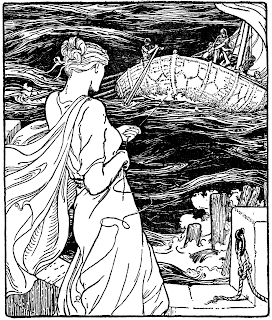
Rescuing a ship with incredible strength

Tweaking the rules

This framework works best when the cost of character advancement increases drastically with ever level (as in most editions of D&D). That way, a PC isn't terribly disadvantaged by diverting a split of their wealth/xp to maintain a small coterie of backups.

The GM may need to tweak the total size of wealth awards, and/or give a small bonus to any xp allocated to followers (so that it doesn't feel like the current character is losing out). There should be a balance; players should feel a tension between the risk of investing in their PC and the surety of investing in their followers (in case their PC dies).

Different play groups can organise things differently. One player could pick another's follower as a replacement if they agree, and possibly if a bonus/weregild is paid to compensate. Players could trade followers. A group might decide to divert some initial split of their loot into a set of replacement characters, then treat them as a communal resource.

Followers are also a resource in themselves, providing spells and character abilities and so on, giving additional incentive to invest in them. However, in a world where returning from death is cheap and easy, players won't feel as compelled to 'waste' xp on maintaining a pool of followers. The GM might need to make resurrection spells cost additional wealth/xp, or improve the rate of return on follower advancement, to balance it out.

This system would be easily adapted to a playstyle where everyone plays multiple characters at the same time.

Fighting a giant snake

What are the benefits?

So going back to that initial list of old-school play elements...

- Gold-as-xp, and treasure-hunting as the foundational mode of play
- Delves and expeditions

This framework, being predicated on plundered gold-for-xp, puts the focus squarely on treasure-hunting. Having a long time frame and big expeditions also helps emphasise the sheer amount of wealth in the adventure location: it's worthwhile planning a trek across the sea, continent, or world for.

- A slower, more plausible pace of character advancement including training costs for levelling up
- Costs for character death; replacement characters who aren't automatically the same power level as their predecessor

This framework achieves these while offering the players a lot of important choices. The long time frame with seasonal expeditions means that there are regular opportunities for the characters to advance via lengthy training without the pace of adventures precluding it, and without the game devolving into fine-grained in-world scheduling puzzles.

- Emphasis on investing in a base, community, big player-driven projects, and other aspects of the game world
Having increasingly huge amount of treasure in more distant and difficult-to-get to dungeons, alongside increasing wealth costs for levelling up, also helps with game world investment. PCs can do social climbing, come up with their own megaprojects, invest in capital, build fortresses, improve their communities, and so on, with the half of their looted treasure that they can't use for character advancement.

Having an expedition 'off season' (winter) creates room to breathe, and for PCs to get entangled in whatever the player finds compelling: planning, hiring, selling treasure, magic item creation, wheeling and dealing, starting a family, capital investment, politicking, dealing with long-term campaign events, and so on.

- Social connections, hirelings, delegation, and realm play
Expedition-based play encourages use of hirelings, and managing a coterie of followers ties in well with managing hirelings and paves the way to realm-based play. Travelling for a long time to an adventure location necessitates retaining staff or paying friends back home to tend to the character's other, broader concerns while the character is off adventuring.

- A slower or more 'realistic' time required to recover from injury
Not everyone cares about verisimilitude, but for those of us who do, the long time scale and the group of followers together permit a GM to tweak rules and powers towards needing long-term recovery. A character who gets injured has the time required to heal up before the next expedition. When a character is knocked out of a delve due to injury, their player isn't sidelined for a session or two; they have followers with them who can go in instead. Or they can attempt the risky proposition of having their PC continue while seriously injured, knowing they have the backstop of having levelled followers back home if 'injured' turns into 'dead' as a result.

Trekking up a glass mountain

...And finally, as the Against The Wicked City article noted, players will have a chance to actually update the age written on their character sheet.

Friday, 5 April 2024

Alternatives to Legendary resistance

Preface

Dungeons & Dragons 5e is a game that is fundamentally about combat. The outright majority of the game's mechanics and systems are geared that way. Of the ~25 pieces of information in a typical 5e monster stat block, 70 percent are combat stats and 20 percent are combat-related.

D&D 5e also offers tools for balancing combats by character level, purportedly with a fine degree of accuracy, and the Game Master's use of these tools is intrinsic to the core gameplay.

As a central, fine-tuned, high-stakes part of the game, combat therefore needs to work well and be satisfying.


Solo monsters

Some of the most archetypal tabletop gaming experiences pit a small group of player characters against one powerful, dangerous, usually large, monster.

But consider the boss and/or solo monster (and to a degree, monsters that appear in pairs or with a group of weak minions). In at least the last twenty years of D&D editions, boss monsters have suffered from a pair of related issues.

  • First, they are often outplayed in the 'action economy'.
  • Second, they are particularly vulnerable to 'save-or-suck' abilities, such that only one success is needed to trivialise the combat encounter.

5e does fairly well on the action economy stakes – at least, for legendary monsters which can enhance their multiattack or once-per-turn spell with lair actions and legendary actions. A GM who uses a non-legendary high-CR creature as a boss monster may find it falls behind in its ability to act (unless they pick something like the marilith or hydra, which have large numbers of attacks and extra reactions).

But 5e's approach to proofing bosses against save-or-suck is a blunt instrument.


Warrior fights a hydra in the sea


Legendary resistance

D&D 5e is stuffed with status effects and such – banishment, restraint, incapacitation, sleep, save-or-die, paralysis, blindness, mind control, etc – which can be useful when levelled against a group of adversaries, but which risk trivialising a boss fight if pulled off.

The 5e designers were aware of this:

  • Some ongoing status effects offer a saving throw repeated each turn to escape. (But there is little overall consistency on this.)
  • Boss monsters tend to get improved saving throws.
  • Boss monsters also fairly often have advantage on saves via Magic resistance.
This does help bosses resist neutralisation by save-or-suck. But because of the amount and flatness of a d20's variance, this risks turning the meta-game into action economy optimisation with a hint of roulette wheel.

So the designers also came up with the blunt instrument of 'Legendary resistance', to discourage players even trying save-or-suck spells in a boss fight. Three times a day, when a boss monster fails its save, it can choose to succeed instead.

And this basically works. It creates incentives to use alternative abilities (straight damage, buffing or summoning allies, no-save spells like Forcecage, Heat Metal, and Maze, etc).

Players can still try to double down on incapacitation if they really want to, but have to use attrition to penetrate the boss's saves and its uses of Legendary resistance. It becomes a hit points analogue, with high randomness and low granularity.


Grim reaper leads a pack of hungry hounds

The problem is that just no-selling a player character ability isn't very fun at the table, and doesn't align well with other aspects of 5e's design.

It can also have unintended consequences. Player characters are incentivised in the meta-game to 'use up' the boss monster's Legendary resistance with their weakest, longest-range, and cheapest or most easily replenished abilities, while trying to disguise which ability they are using, to foil their adversary's ability to choose whether to no-sell something. This 'optimal tactic' can really throw you out of the game if you were expecting to be simulating a thrilling high-stakes encounter against a powerful monster.


Simple alternatives

Here are some ways you can change Legendary resistance to make it more fun and subtle, in order of least noticeable to most substantial change.

1. Make it have a cost. When Legendary resistance kicks in, the monster loses hit points, or a spell slot, or has disadvantage on saving throws until its next turn. This makes it more of an emergency measure but isn't always easy to justify in-universe.

2. Make it use up the creature's reaction. This at least means that the monster must be more selective about its use of Legendary resistance. If it has access to a special reaction like Parry or casting Shield, it also needs to balance against the possibility that it will want to use its reaction for that this round.

3. Make it a legendary action. One which can't be used on the same turn the saving throw was failed. The PCs get to capitalise on the status effect for at least one turn, and get to witness the monster actually do something to end the effect (e.g., giving a monstrous howl, straining its muscles, spitting up blood, clawing at itself). There's also the opportunity cost of legendary action selection.

4. Make it a bonus action. This is the same thing but more so: the creature must wait until its next turn to end the effect. If the boss monster has special bonus actions, now it must forego one to shrug off a status effect.

You could then give Legendary resistance variants to various not-necessarily-boss monsters that are "meant" to stick in a fight longer, replacing the unreliable high save bonuses + Magic resistance combination.


Complex alternatives

Finally, if you have the time and inclination, you could fully overhaul 5e's framework of status conditions.

One modern design paradigm is to stack worsening status effects / spell effects. For example, Pathfinder uses variable status penalties: clumsy, doomed, drained, enfeebled, frightened, sickened, slowed, stunned, and stupefied incrementally penalise checks and task DCs.

Once you have gradated rather than binary conditions, more powerful 'boss' monsters can be given a greater initial resistance to those effects, or a greater capacity to suffer them, or substantially higher values in all the numbers that will be penalised, or a special ability to reduce them over the course of combat.

Tuesday, 20 February 2024

How I think about story games

What follows isn't an attempt at a codification or taxonomy or definition. In fact, it deviates from some of the language people use to describe TTRPGs and story(-telling) games.

It's a way of looking at the design space that I've personally found useful, and a sketch of some of the ways people end up arguing at cross-purposes about story.

Arthur Rackham illustration of four adventurers setting out from town


Story  ∈  TTRPG

First, the process of playing a tabletop role-playing game does inevitably create stories: whether you think that's the point of playing or not; whether you think the GM should try to steer it or plan it or not; whether you think there's story from start to finish or only after the fact.

Back in 1987, Gary Gygax advised that

When the principal characters in a story (the campaign) are free-willed and have a multitude of choices regarding how to proceed, it is counterproductive – and, in fact, impossible – to preordain just how the events in the campaign will unfold.

In 2009, the Alexandrian made the firm case most of us are familiar with: don't prep plots.

A plot is the sequence of events in a story.
And the problem with trying to prep a plot for an RPG is that you’re attempting to pre-determine events that have not yet happened. Your gaming session is not a story — it is a happening. It is something about which stories can be told, but in the genesis of the moment it is not a tale being told. It is a fact that is transpiring.

In 2021, the Angry GM noted that

the story—the narrative—is an emergent thing. Your game’s going to have a narrative when it’s done. Like it or not. And people are going to interpret it based on how they think stories work. Players won’t experience the game as it was. They’ll experience it based on their warped perception of it. [...]

Once your game’s done, it’s going to have had a plot. It’s going to have followed a single sequence of events. There’s going to have been a climax. People—even you—will remember that s$&%. You can either use what power you have to steer the game toward the best narrative possible. One that does the things that thirty millenniums of storytelling have taught us make for good stories. Or you can hope and pray that the emergent narrative is accidentally a good one. It’s your call.

And just recently in 2024, Tom van Winkle wrote a superb article about the nuances of all this. If you only have time to read one blog post today, go read that one instead of this.

The assumption seems to be that to create a story, you need a plot in advance. It's important for the entire entry here to understand that that is not true. [...]

What all the "anti-story" gamers have in common today is that they allowed other people to define the term "story" for them as "pre-designed plot," even though that's not what story means.

He analyses "anti-story" gamers, who

have, apparently unwittingly, accepted the false idea that RPGs would need plots designed in advance to have stories in a story-telling game. Their objections are therefore confusing for many people who are aware that they experience stories arising spontaneously in RPGs.

The underlying claim is: playing a tabletop role-playing game is intrinsically a process of telling a story. And yes, in a technical sense, this is absolutely true. In a TTRPG session, real-world people are making deliberate decisions that lead to the details of a fictional universe and events within it being filled in. Therefore, definitionally speaking, the players and GM have collaborated to tell a story.

Tom van Winkle in particular discusses the literature, and what scholars of story and narrative have agreed on, and how that applies.

The problem, though, is that in everyday, natural English for the layperson, the phrase "tell a story" comes with all sorts of baggage that doesn't necessarily apply to TTRPGs.

The phrase is laden with subtle implications in common English:

  1. Telling a story means the storytellers are doing so with the primary goal of producing a 'good story', or at least are telling a story intentionally
  2. Telling a story means the storytellers have equal parts, or at least similar amounts of creative control
  3. Telling a story means the process is done selectively, without random elements
  4. Telling a story means that core elements of the narrative are planned (at least a little in advance), not suddenly discovered
  5. Telling a story means that people are making choices in order to further the narrative in a satisfying way, which might not be the 'optimal' or even plausible choices for a particular character
  6. Telling a story is unregulated by formal mechanics, or at least largely so


None of these are true of TTRPGs in general. They're not even all true simultaneously for most story-telling games!

So telling a novice who's interested in entering the hobby that a TTRPG is necessarily 'about telling a story' is frankly just misleading that person, unless you stop and break down why 'telling a story' doesn't mean most of what they think it means. (And it may lead to further misunderstandings, like when they hear the term 'player agency' and think it means creative agency over the fictive world, and so on...)

...We still have this phrase, 'story game'.

Two axes

When I think about 'story games' and TTRPGs, I envisage two parallel tracks running left to right.

Rules <-> Freeform; Decisions <-> Insertions

On the first axis, we have 'rules' to the left and 'freeform' to the right. This axis mostly has to do with the GM, if the game has one.

  • A game can be towards the left, 'rules', with lots of rules and processes for decision-making. A game here encourages system mastery for both the GM and the players. It doesn't necessarily imply more control or omniscience for the GM: the game could be heavily reliant on random tables, for instance, or there could be lots of codified rules for how the players get to mess around with the game world directly rather than through their characters.
  • A game can be towards the right, 'freeform', taking an open-ended and freeform approach to actual gameplay. In this case the GM is making up a lot as they go along, relying more on the characteristics of the world that have so far been determined than on rules and frameworks provided by the game.
  • A game can be somewhere in the middle, with moderate rule support.


On the second axis, we have 'decisions' to the left and 'insertions' to the right. This axis has more to do with the players than the GM.

  • A game can be towards the left, 'decisions', where players control their character's mind – the decisions they make – and nothing else. The GM determines what is in the world, controls events and NPCs, and adjudicates PC decision outcomes. (But even the most leftward TTRPGs usually have a carve-out here for character generation, where players get to pick things about their character which the character realistically couldn't have chosen within the world.)
  • A game can be towards the right, 'insertions', where players have power over aspects of the game that isn't through their characters. In some situations characters can create, choose, affect, invent, or veto, but in games like this the players have an ability to create, choose, affect, invent, or veto.
  • A game can be somewhere in the middle, mixing approaches.


The reason I picture the tracks as parallel is that many games, if you map them onto the axes, make a line that's close to vertical. That is,

  • Most, though not all, 'traddish TTRPGs' (games with few to no overt player-available story-telling elements) are also mechanically rigorous. They are towards the left on both axes. In general, the GM has lots of power and mechanical support, and the players will know that most things they choose to do will be covered by rules. Whether those rules are good or bad, players may be uneasy with situations where the GM has to go with their gut over having an 'official' answer. It will be unusual (troubling, even) for a GM to invite a player to fill in gaps in the world or determine action outcomes.
  • Most, though not all, 'collaborative story-telling games' (in which players are permitted to insert content directly into the world rather than being restricted to attempts to alter the world with their characters) have relatively few rules and processes. They are towards the right on both axes. In general, there isn't anywhere near as much of an authority disparity between the GM and the players, or there might not be a GM at all. The game rules tend to be 'softer' or 'fuzzier', the players are given more overt license to override or ignore them, and the mechanical framework is usually designed more towards 'crafting a satisfying narrative' than towards 'playing a skill-requiring game' or 'simulating a fictional world'.

I'm personally most interested in the leftward side of both scales. I've designed at least one little game that wanders around the middle of the axes, and have a few others sitting on the project pile, but as a designer and player I mostly lean left, towards 'traddish TTRPGs'.

But I'm also interested, from a design point of view, in the rare oddballs. The really open-ended, rules-light TTRPGs with high GM authority, perhaps like this idea. And the highly constrained, rules-heavy, almost formulaic, versions of story-telling games, with no referee.


Ways of playing

We can map the way people actually play games onto these two tracks, too. As opposed to how games were designed to be played.

The big example here is (as it often is) D&D 5e. The system is to the centre-left on the rules/freeform track: it's crunchy and extensive compared to a lot of indie games, but not as much as previous editions of the same game, or GURPS, or whatever). And it's quite far left on the decisions/insertions track: the official rules only contain (outside character generation) a few optional and tacked-on suggestions about direct player control over the world.

Interestingly, this isn't always borne out in play. It's possibly due to the rise of people entering the hobby via watching televised 'actual play' by actors, or possibly a trend that's always been there but is just more visible now. A lot of people these days play D&D as if it was further right on the decisions/insertions scale. Players in a lot of games end up with a certain amount of creative control over the world.

To put it in fuzzier terms, they inject elements of a collaborative story-telling exercise into a relatively traddish TTRPG when they play. And that's fine. I suspect they might be better served by playing an actual story-telling game with design elements supporting that, but ultimately, let people have their own fun.


To sum up

This is just how I think about things. It's not a formal system or a position on how things ought to be done.

I think it's fair to say that all TTRPG involves the creation of story – and again, go read van Winkle's article for a really well-considered take – and that some people have the creation of that story as a more primary concern than others. I think that the phrase 'telling a story' has misleading implications when it comes to TTRPGs, which is why I personally avoid saying that TTRPGs deeply involve it, even if (getting into the weeds) it's true. And I find it interesting that when it comes to story, we can try to pin games onto two axes which quite often correlate with one another.


Monday, 5 February 2024

The 'Four Humors' Theory of TTRPG Players

The Angry GM recently published an article about the distinct ways in which players play RPGs, with the specific example of D&D.

He mentioned in particular the rise, or increase, of an attitude towards the game as an intrinsically theatrical activity, adding that to the old GNS classification:

Some players see D&D as a Game. They think it’s about overcoming obstacles, winning adventures, accomplishing goals, and advancing characters.

Some players see D&D as a Narrative. They think it’s about telling a story of fantasy adventure and they want to share the most interesting story possible.

Some players see D&D as a Simulation. They think it’s about entering a world as a character and dealing with it as it is. Whatever happens happens.

And now, some players see D&D as a Performance. They think it’s about putting on a show. They have a role to play and they’ve got to play it to the hilt. In the most interesting and engaging way possible.

It's a good article, worth checking out. While reading, it occurred to me that we could treat GNS Theory as just a way to describe some of the emergent properties of a simple pair of dichotomies, along the lines of another well-respected and evidence-based organisational schema, that of the humoral theory of human health.

The four humors, via Wikimedia

Take all of this very seriously please.


A simple pair of dichotomies

Somebody is playing a tabletop role-playing game. They are engaging with an activity, making decisions, thinking about what they are doing. The act of play is, ultimately, a realisation of the act of thought. What is the player spending most of their brainpower thinking about?

There are two dichotomies here.
  1. Is the player thinking mostly about their real world environment (the people they are playing with, the game rules, the miniatures, the side conversations)? Or are they thinking mostly about the fictive setting? Or something in between?
  2. Is the player thinking mostly in an inward-looking away, about themself and what is theirs or squarely within their purview? Or are they thinking mostly in an outward-looking way, about things around them and outside of their control? Or something in between?

We can put this on a pair of axes, as in this professionally-drawn image.

Fictive vs Reality; Inward vs Outward


And now a picture emerges, of what GNS+P is describing, but defined in terms of these innate characteristics of human thought: wet, dry, hot, and cold fictive, reality, inward-looking, and outward-looking.

 
GNS+P mapped onto "Fictive vs Reality; Inward vs Outward" in an excessively complicated way. G=yellow, S=blue,  N=black, P=red.


These of course are what modern medicine ludology teaches us are the fundamental building blocks of blood, phlegm, yellow bile, and black bile different ways to engage with a role-playing game.

GNS+P Theory doesn't map precisely to the four resulting quadrants, of course. There's some interplay and outliers. We have debatable blobs, not square pigeonholes.

GNS+P mapped onto "Fictive vs Reality; Inward vs Outward" in an excessively complicated way, with extra text labels that will be discussed in the article below.


Let's break this exciting new bit of science down.


Yellow bile 'TTRPG as Game'

Temperament: choleric (ambitious, driven, aggressive)

What is a Gamist player thinking about?

TTRPG as Game


Their thoughts tend to be INWARD-LOOKING: upon their own (and usually necessarily, the group's) ability to win; to this end they channel attention into their own player skill, their own knowledge of the rules, and making decisions about their own character's capabilities.

Their thoughts typically tend towards REALITY: the nature of the game and how to win it, the rules and mechanics, win and lose conditions, and how to get other players to go along with their plans. But they do still focus some of their attention on parts of the fictive environment: the obstacles to winning that their character encounters, and the mechanical ways they can get advantages with their character (in particular, advancement). The yellow blob in the diagram therefore stretches away towards the left.

To put it another way, Gamists have an excess of yellow bile.


Black bile 'TTRPG as Narrative'

Temperament: melancholic (sad, delusional, deep in fantasy)

What is a Narrativist player thinking about?


TTRPG as Narrative


Their thoughts tend to be OUTWARD-LOOKING: towards the group having a satisfying play experience and how the game's play will become a story after the fact. At times, they may care more about their own enjoyment of the game-as-story, thus leaning towards the inwards-looking position.

Their thoughts tend towards REALITY: making decisions for the good of the players' play experience, the emergent story, and what will be 'interesting'. If they care about the game rules, it is in case those become an impediment to higher-order goals. (The Narrativist's thoughts may also drive towards a story with verisimilitude and/or immersion, creeping towards engagement with the fictive environment.)

To put it terms we can all understand, Narrativists may have an excess of black bile.


Phlegm 'TTRPG as Simulation'

Temperament: phlegmatic (calm, reserved, analytical)

What is a Simulationist player thinking about?

TTRPG as Simulation


Their thoughts tend to be OUTWARD-LOOKING: at the world around their character, and at things they don't already know. They want to discover things about the fictive world and see how they mesh together, and inwards things like their knowledge of the rules and their character are mostly ancillary to that. But the act of engagement still requires making plausible decisions about the character, and the Simulationist does typically spend some attention on their character's place within the world (thus, the blue blob on the chart reaches upward).

The Simulationist's thoughts are almost strictly FICTIVE: They care most about the world they are playing in. The game's rules are meant to simulate a world, the GM is the arbiter of those rules, and the outcome of those rules is to be accepted and examined, never challenged or overruled for the sake of higher-order player/GM goals.

So of course, Simulationists have an excess of phlegm.


Blood 'TTRPG as Performance'

Temperament: sanguine (passionate, mirthful, self-indulgent)

The Angry GM suggested 'Performance' as a new and increasingly popular playstyle category, characterised by (amongst other things) creating

characters with clearly defined motivations, personalities, beliefs, goals, and fears right from the get-go. Their character’s character doesn’t emerge from gameplay and it doesn’t change as the game plays out.

What is a Performer player thinking about?

 
TTRPG as Performance / 'Entertainer island', diametrically opposite

Their thoughts are ultimately INWARD-LOOKING: Most of all, they care about their own character, deciding its intrinsic properties, and then getting across those preselected properties.

Their thoughts are largely on the FICTIVE: How to affect the fictive world by determining a tiny part of it; looking for opportunities in the world to accomplish their secondary goal of expression. External things like 'the game rules' and 'the other players' don't impact this very much for trad RPGs.

Or as we normal, modern people would definitely say in normal, modern terms, "Performers have an excess of blood".

I put something weird on that chart, though.

 Entertainer island

I think there's a little outcrop of the Performative playstyle occupying the diametrically opposite position.

A player can start with a solid foundation of hot, wet inward, fictive humors. That is, they have a firmly imagined static character with predetermined characteristics and sometimes even an intention to pursue a 'character arc', whatever on earth that means when you're (a) playing a game that (b) involves, at its most fundamental level, making decisions about situations that you have no foreknowledge of.

But with those humors as a firm foundation, most of the player's attention is freed up to focus on the actual performative act, which is ultimately outward-looking in reality (given that it is a process of interaction with an audience). With this inversion of the expression of their bodily gameplay humors, the Performer is now thinking primarily about the theatrical entertainment of the other players / the GM / their Twitch audience / passersby in the real world. When taken to excess, to the game's detriment.


Balancing the humors

So it seems likely that people can have a predisposition towards certain humors, and we might or might not regard this as an imbalance of humors.

What are the implications? Let's sketch just a few, presupposing (naturally) that two thousand years of high-quality humoral medicine can be extended to the modern environment of the game table.
  • A player who is desirous of a more neutral or 'balanced' playstyle may examine the degrees to which they are inward- or outward-looking, in the fictive world or reality, and deliberately change their behaviours accordingly.
  • If the players and the GM at a table all have a similar humoral temperament, then we would expect their games to run well if they indulge in that temperament, although players of a different style would scarcely recognise the game they were playing!
  • In rare circumstances where the group dynamics are just right, players of completely opposite humoral temperaments may 'cancel out' at the table due to the ways they use and express those temperaments, resulting in (against the odds) a harmonious, near-maximally-enjoyable game.
  • Obviously, players may be able to select the right foods and drinks to modulate any excess of humors. By careful review of TTRPG play I have discerned some of the modern-day nostrums: pizza (hot + dry); coffee (hot + wet); soda (cold + wet); chips (cold + dry).

Science marches ever onwards.

Fantasy Fantasy League

  I've just released the full version of Fantasy Sports Fantasy League for pay-what-you-want! It’s more or less a TTRPG, but not like ...